職能と材料を持ち寄り、現場に製造工程を組み立てる
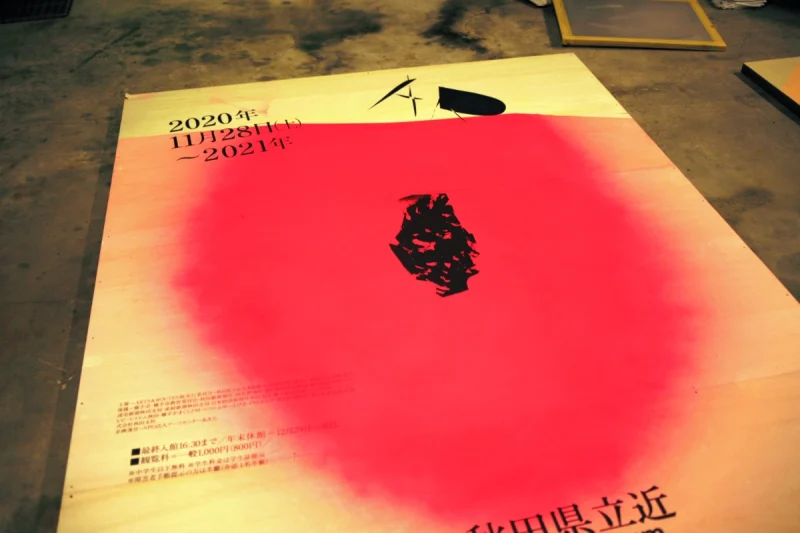
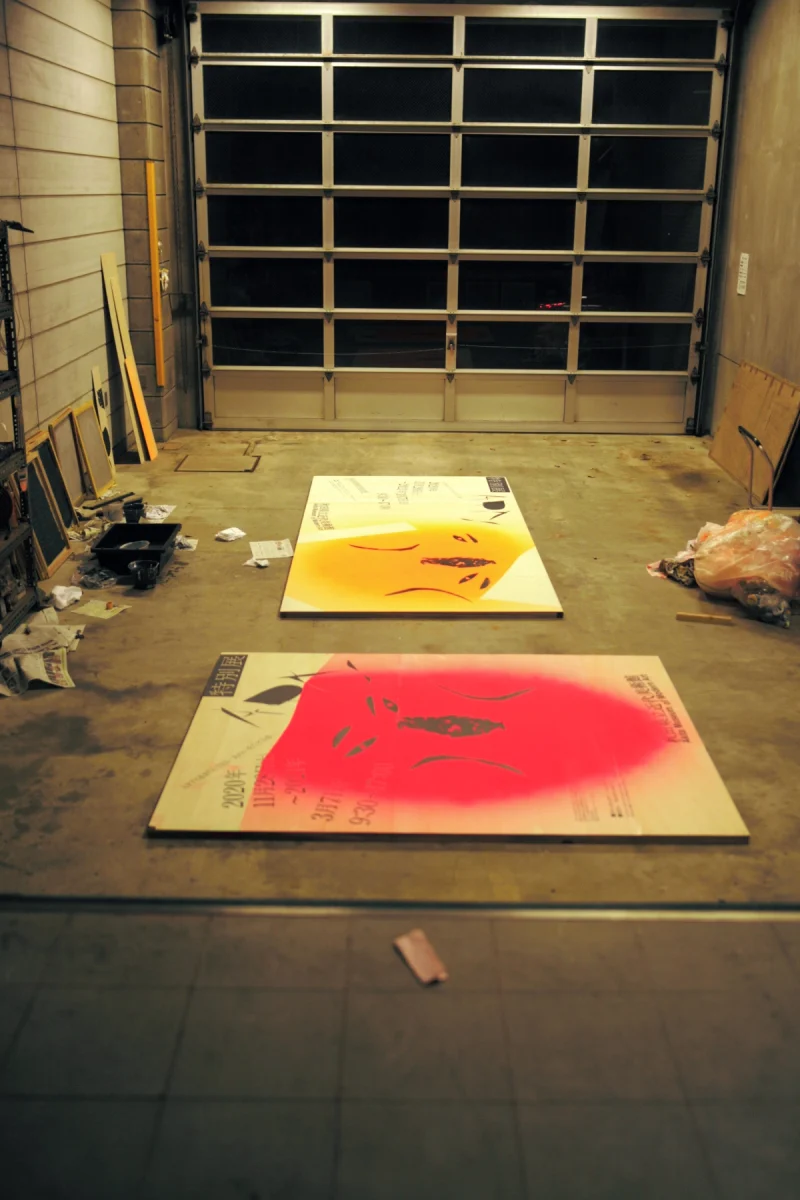
展覧会「ARTS & ROUTES あわいをたどる旅」のために制作した、二台の屋外案内看板。
制作チームは、大工、テキスタイルデザイナー、グラフィックデザイナーの三名。それぞれが異なる場所から、自らの職能、道具、技術を持ち寄り、展覧会場に一時的な製造工程を組み立てた。
事前にクライアントと協議し、掲載する情報と大まかなデザインの方向性を決定した。メインビジュアル、日時、会場、主催者情報などは要素ごとに分け、あらかじめシルクスクリーンの版を制作した。一方で、各要素の位置や看板全体の構成は細部まで固定せず、支持体の形や塗装によって生まれる余白を見ながら、現場で決めていくことにした。この即興性を含む制作方法についても、あらかじめクライアントの承認を得た。
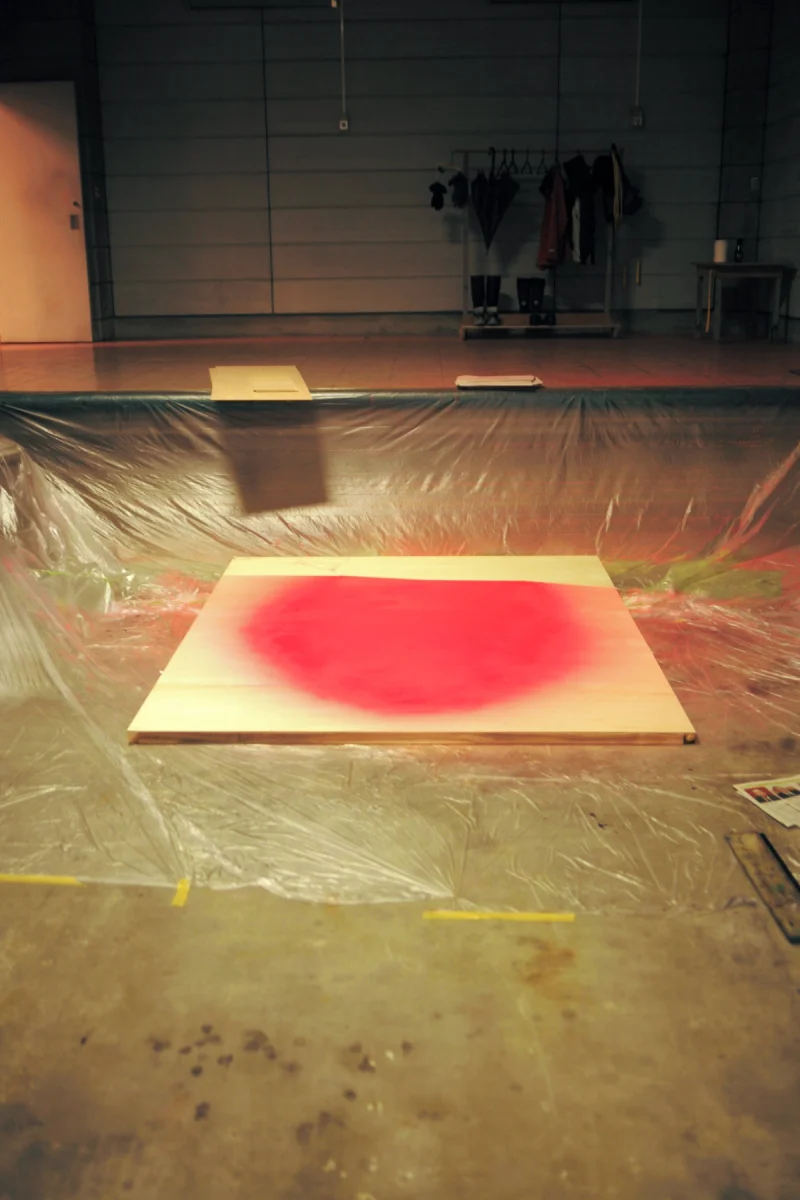
看板は大型だったものの、必要数が二台と少なかったため、展覧会場である秋田県立近代美術館のバックヤードの一角を借り、支持体の製作から塗装、印刷までを現場で行った。完成した看板を工房から運ぶのではなく、看板を生み出すための版、道具、技術、判断の方法を現地へ持ち込んだ。
制作には、大工の荒達宏氏とテキスタイルデザイナーの大江よう氏に協力してもらった。木材、屋外用塗料、スプレーなどは、会場近くのホームセンターで調達した。
看板は冬季の屋外に掲示される。そこで、使用する材料を遠方から一律に持ち込むのではなく、雪や雨の多い地域で実際に流通しているものの中から選ぶことにした。地域のホームセンターには、その土地の気候や建物の維持管理に応答して選ばれてきた材料が並んでいると考えたためである。各地から持ち寄った職能と、施工地で手に入る材料を組み合わせることで、製造工程が現場に立ち上がった。
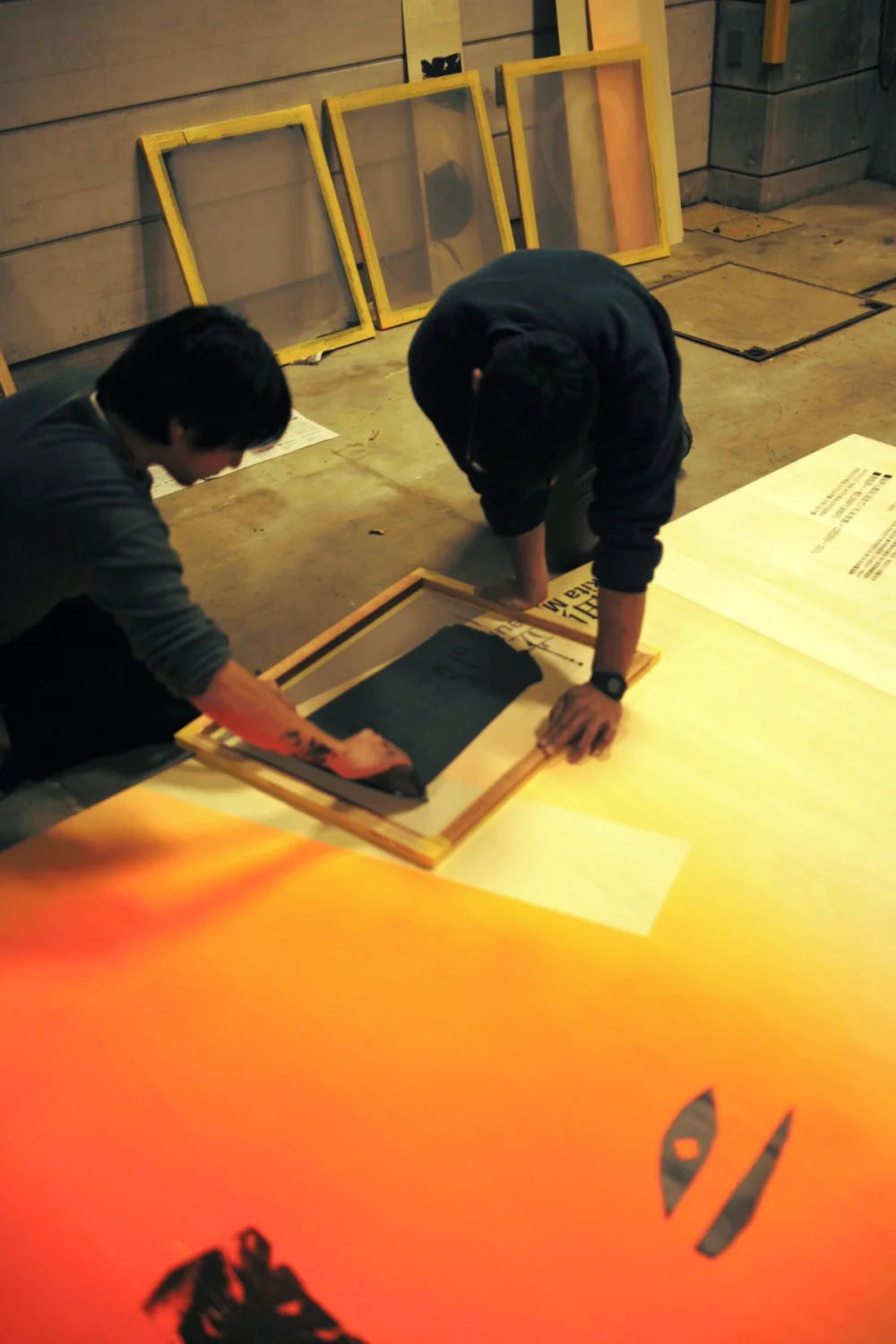
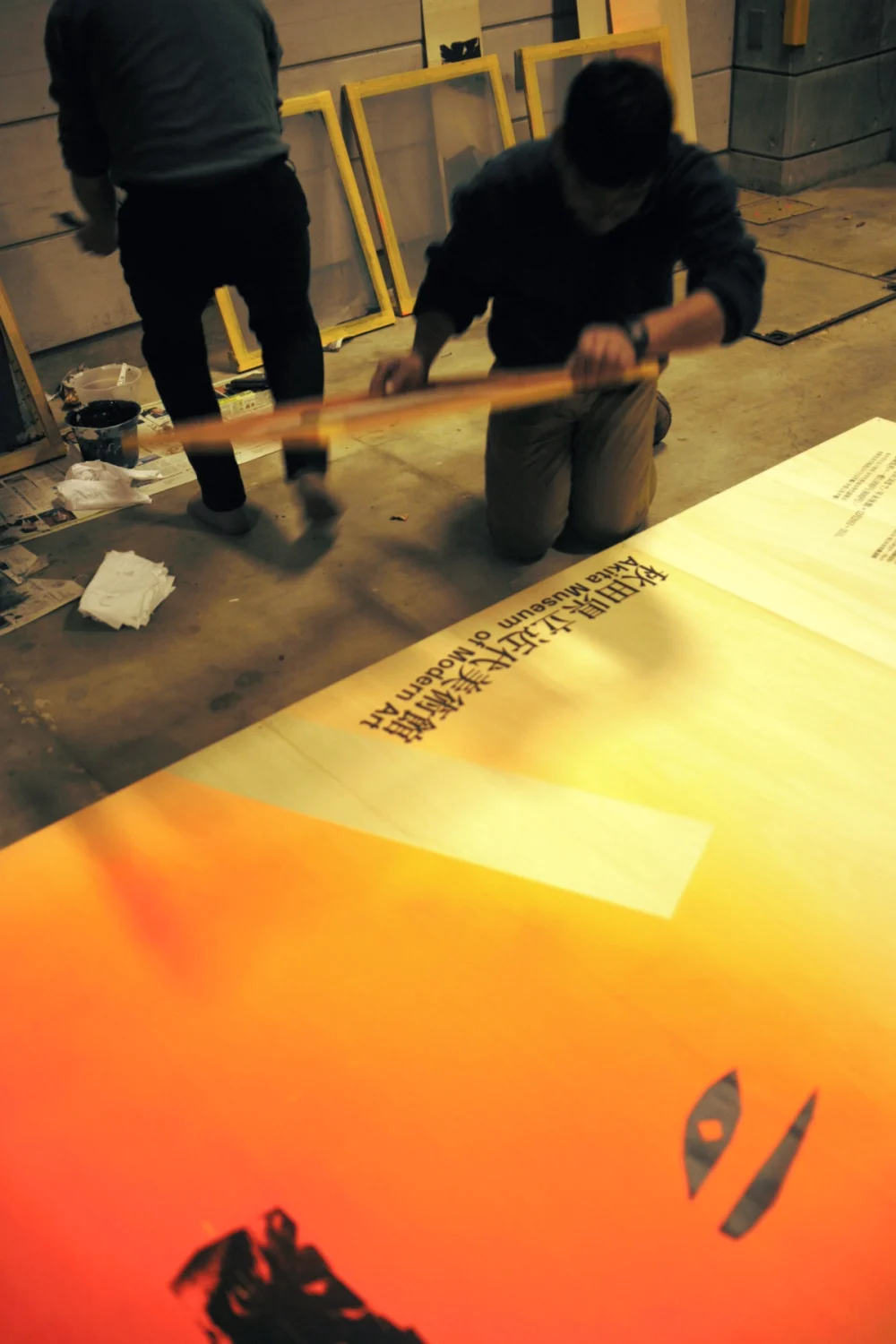
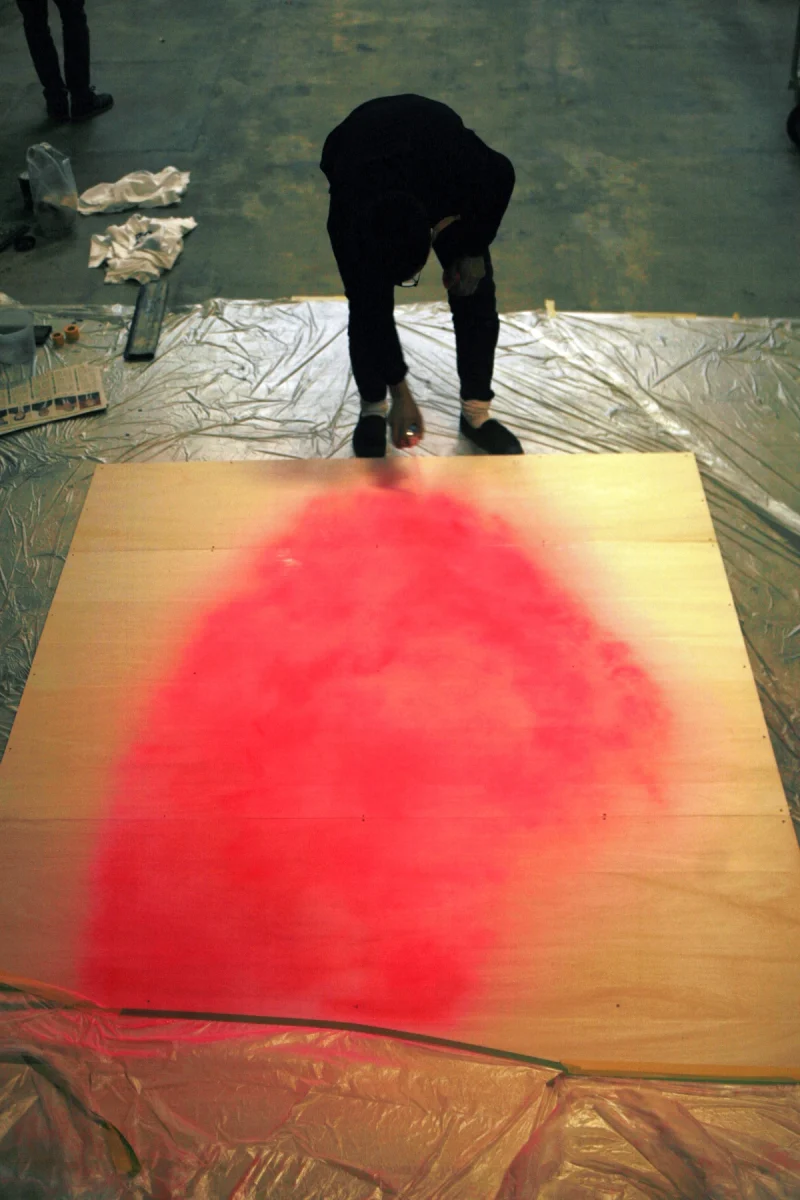
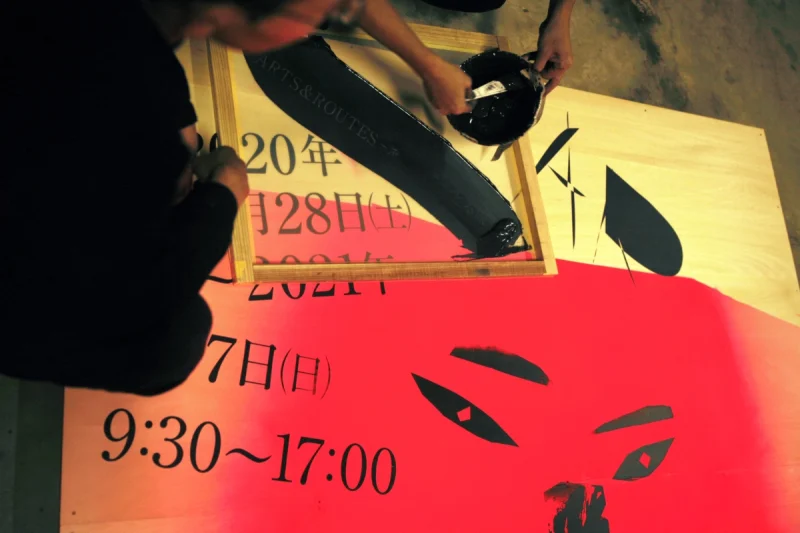
まず、大工がベニヤ板と角材を用いて、下地となる木製看板を組み立てた。その作業と並行して、グラフィックデザイナーがスプレーによる塗装を始め、メインビジュアルとなる顔の位置を決めた。顔を置くと、看板全体のおおよその構成が見えてくる。そこから文字情報の配置を検討し、テキスタイルデザイナーがシルクスクリーン印刷を施した。
支持体をつくり、色を置き、文字を刷る。三人は、あらかじめ分けられた工程を順番に処理するのではなく、前の作業によって生まれた形や余白を受け取りながら、それぞれの判断を加えていった。
その制作方法は、福笑いにも似ていた。用意された部分を一つずつ置き、置かれた形を見ながら次の位置を決めていく。部分が重なるたびに全体像が現れ、その全体像が次の判断を導いた。
ここでシルクスクリーン印刷は、完成したデザインを正確に複製するためだけの技法ではない。一定の形を持つ版を用いながら、刷る位置や順序、他の要素との関係を現場で探るための方法として機能している。複製性を持つ印刷技法と、一回ごとの判断を必要とする即興的な制作が、同時に成立していた。
通常、サイン制作では、デザイン、設計、製作、出力、梱包、運搬、施工が、異なる場所と工程に分けられる。本プロジェクトでは、異なる職能と製造手段を現場へ持ち寄り、それらを同じ場所で同時並行に動かした。さらに、現場で構成を決定することをクライアントが承認したことで、詳細な完成図の作成、工房での完成品製造、大型出力、梱包、運搬、現地施工といった工程の一部を統合することができた。
その結果、制作期間だけでなく、輸送や施工を含む費用も圧縮された。ただし、これは単に工程を省略したのではない。職能、技術、道具を各地から持ち寄り、施工地で得られる材料を加え、現場で製造工程そのものを組み立て直した結果である。
完成したものを運ぶのではなく、つくるための能力を持ち寄る。それぞれの職能と土地の材料が一つの場所に集まり、その場限りの製造工程が立ち上がる。いわば、持ち寄りによって成立する「ポットラック・プロダクション」の実験である。
–
Two outdoor wayfinding signs created for the exhibition ARTS & ROUTES: Journeys Through In-Between Spaces.
The production team consisted of a carpenter, a textile designer, and a graphic designer. Each arrived from a different place, bringing their own skills, tools, techniques, and ways of making. Together, they assembled a temporary production process at the exhibition site.
Before arriving, we discussed the required information and the general design direction with the client. The main visual, dates, venue, organizer information, and other textual elements were separated and prepared as individual screen-printing stencils. Their exact positions and the overall composition of the signs, however, were not fixed in detail. Instead, they would be determined on site in response to the shape of the supports and the spaces created through painting. This improvisational approach was shared with and approved by the client in advance.
Although the signs were large, only two were required. We therefore borrowed a corner of the back-of-house area at the Akita Museum of Modern Art, the exhibition venue, and carried out the entire process there, from building the supporting structures to painting and printing. Rather than transporting completed signs from a workshop, we brought the stencils, tools, techniques, and methods of decision-making needed to produce them.
Carpenter Tatsuhiro Ara and textile designer Yō Ōe collaborated on the project. Wood, exterior paint, and spray paint were purchased from a nearby home-improvement store.
The signs were to remain outdoors during winter. Rather than specifying and transporting every material from elsewhere, we selected from products already circulating in a region with heavy snow and rain. We assumed that the materials available locally reflected, to some degree, the climatic conditions and everyday maintenance needs of the area. Skills brought from different places were therefore combined with materials obtained at the site, allowing the production process to take shape there.
First, the carpenter constructed the wooden supports using plywood and timber battens. At the same time, the graphic designer began applying spray paint and established the position of the face that formed the main visual. Once the face had been placed, the approximate composition of the sign became visible. The textual information was then positioned in response to it, and the textile designer printed the elements onto the surface using screen printing.
The support was built, areas of colour were added, and the text was printed. Rather than completing a series of predetermined and separate tasks, each person responded to the forms and spaces created by the previous action and added a new decision of their own.
The process resembled assembling a fukuwarai face. Prepared elements were placed one by one, and the position of each new part was decided in response to what was already there. As the parts accumulated, an overall image emerged, and that image guided the next decision.
Screen printing was used here not only as a technique for accurately reproducing a completed design. The stencil provided a fixed form, while its position, sequence, and relationship to the other elements remained open to decisions made on site. The reproducibility of printing and the singularity of improvisational making operated at the same time.
Conventionally, sign production is divided into separate stages and locations: design, technical planning, fabrication, output, packaging, transportation, and installation. In this project, different skills and means of production were brought together and activated simultaneously at the exhibition site. Because the client had approved a process in which the final composition would be determined on site, several conventional stages—including detailed final drawings, off-site fabrication, large-format output, packaging, transportation, and installation—could be combined or reduced.
This compressed not only the production schedule but also the costs of transportation and installation. It was not, however, simply a matter of removing stages. The process itself was reorganized by bringing together skills, techniques, and tools from different places, combining them with locally available materials, and assembling a temporary means of production on site.
Rather than transporting a finished object, we brought together the capacities required to make one. Different forms of expertise and materials from the site converged in a single place, where a production process emerged for the duration of the project. In this sense, the work was an experiment in “potluck production”: a process assembled through what each participant and place could contribute.