DESIGN
calling coals / coal's calling
デザインはどこから始まるのか
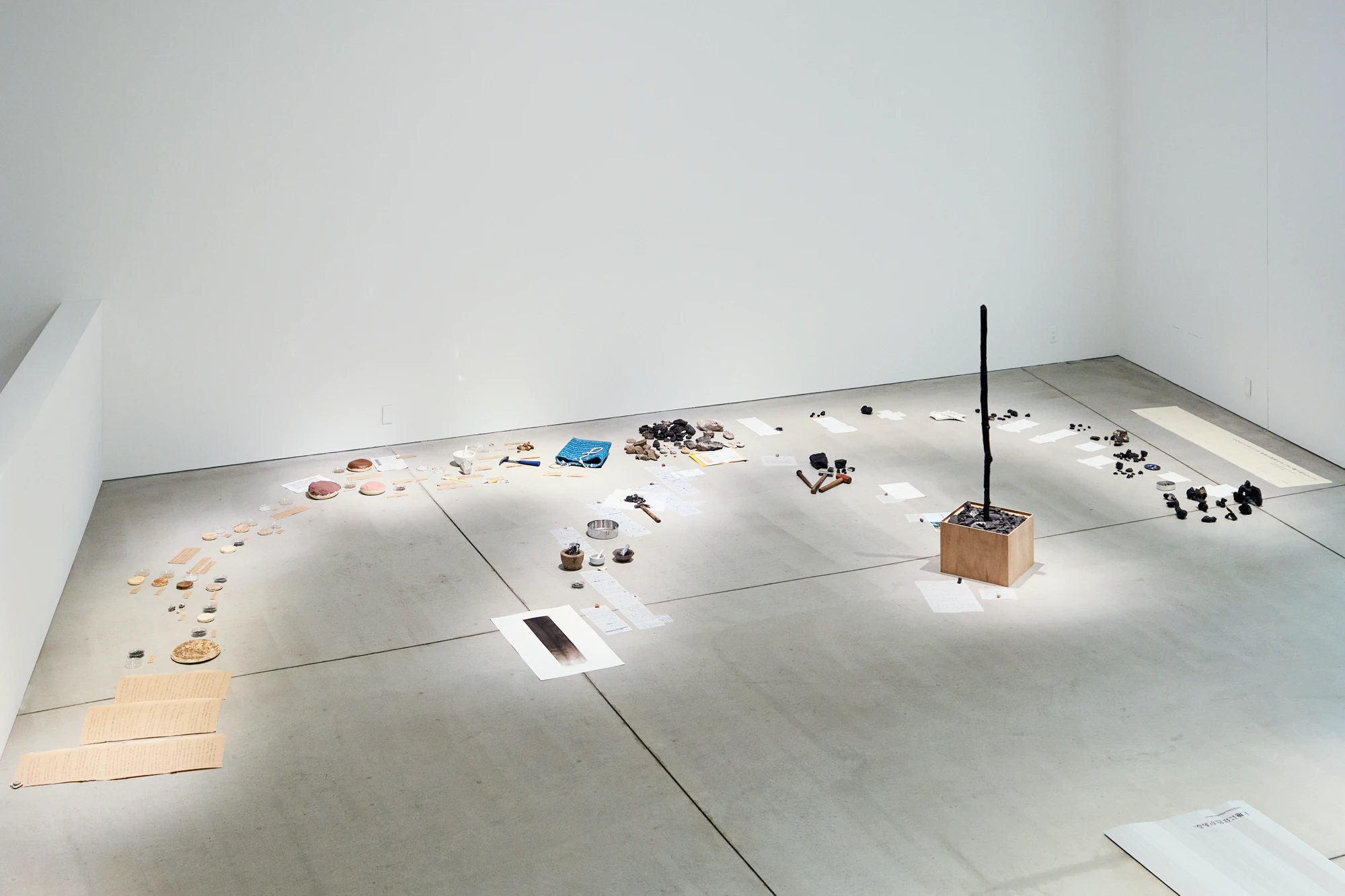
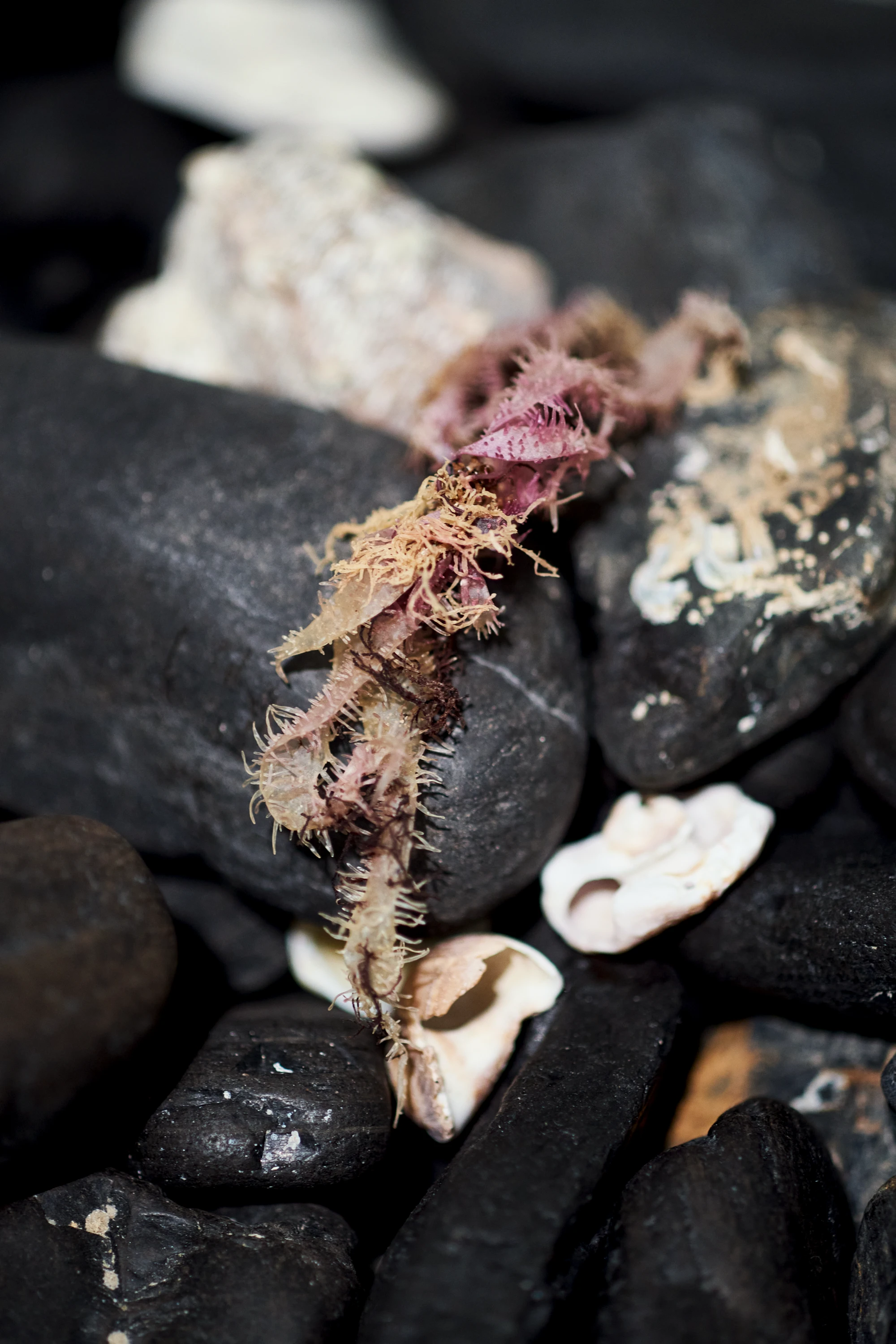
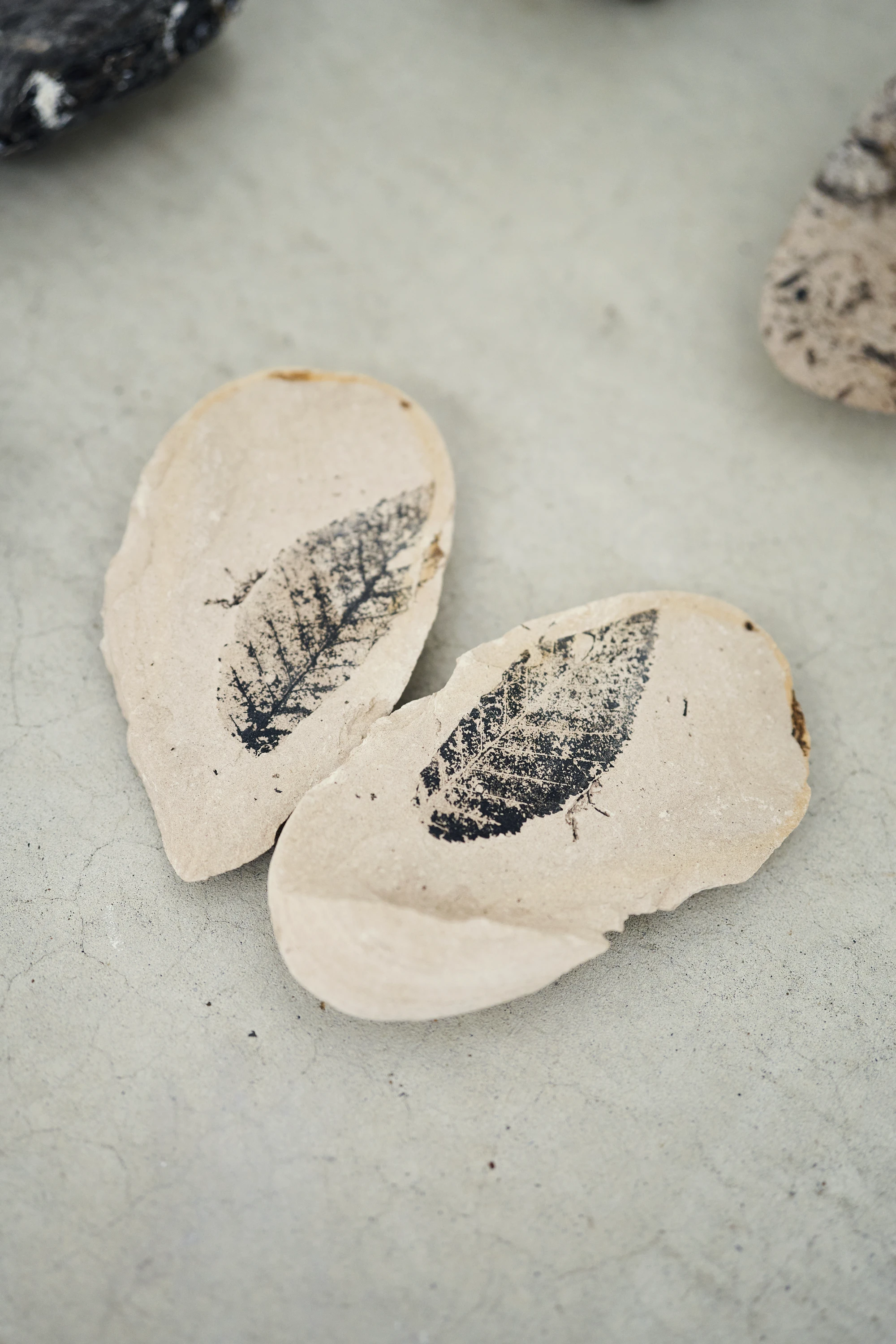
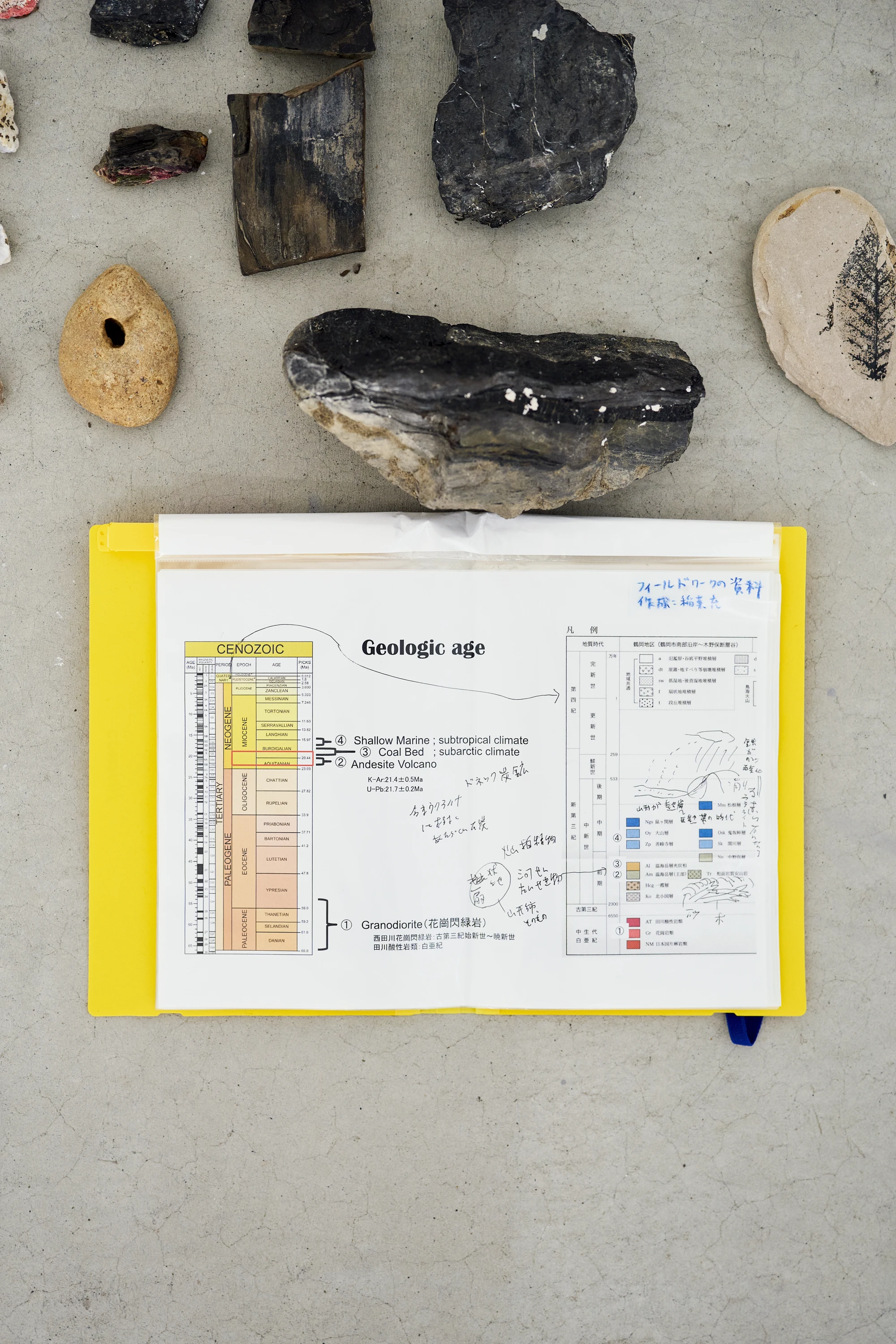
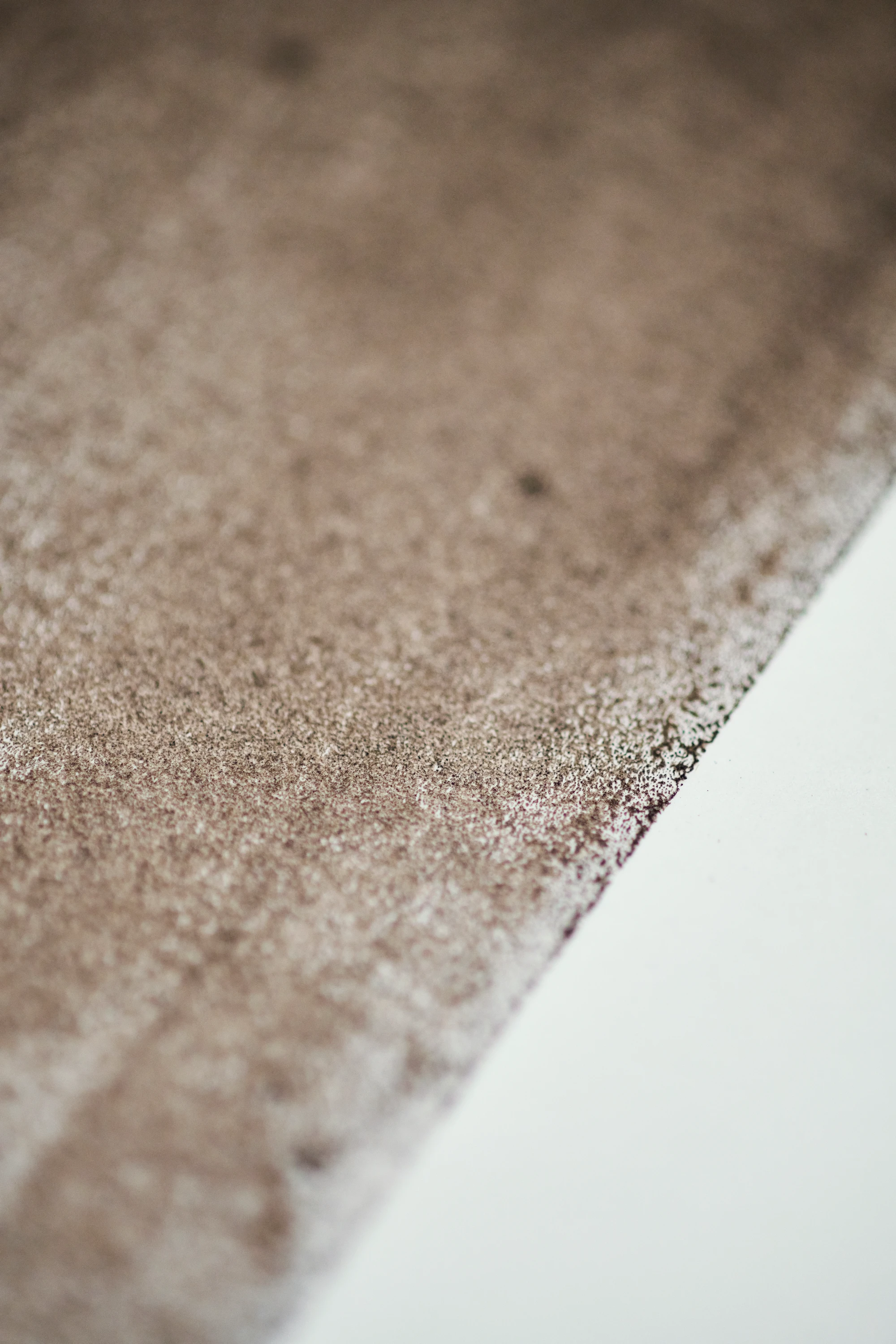
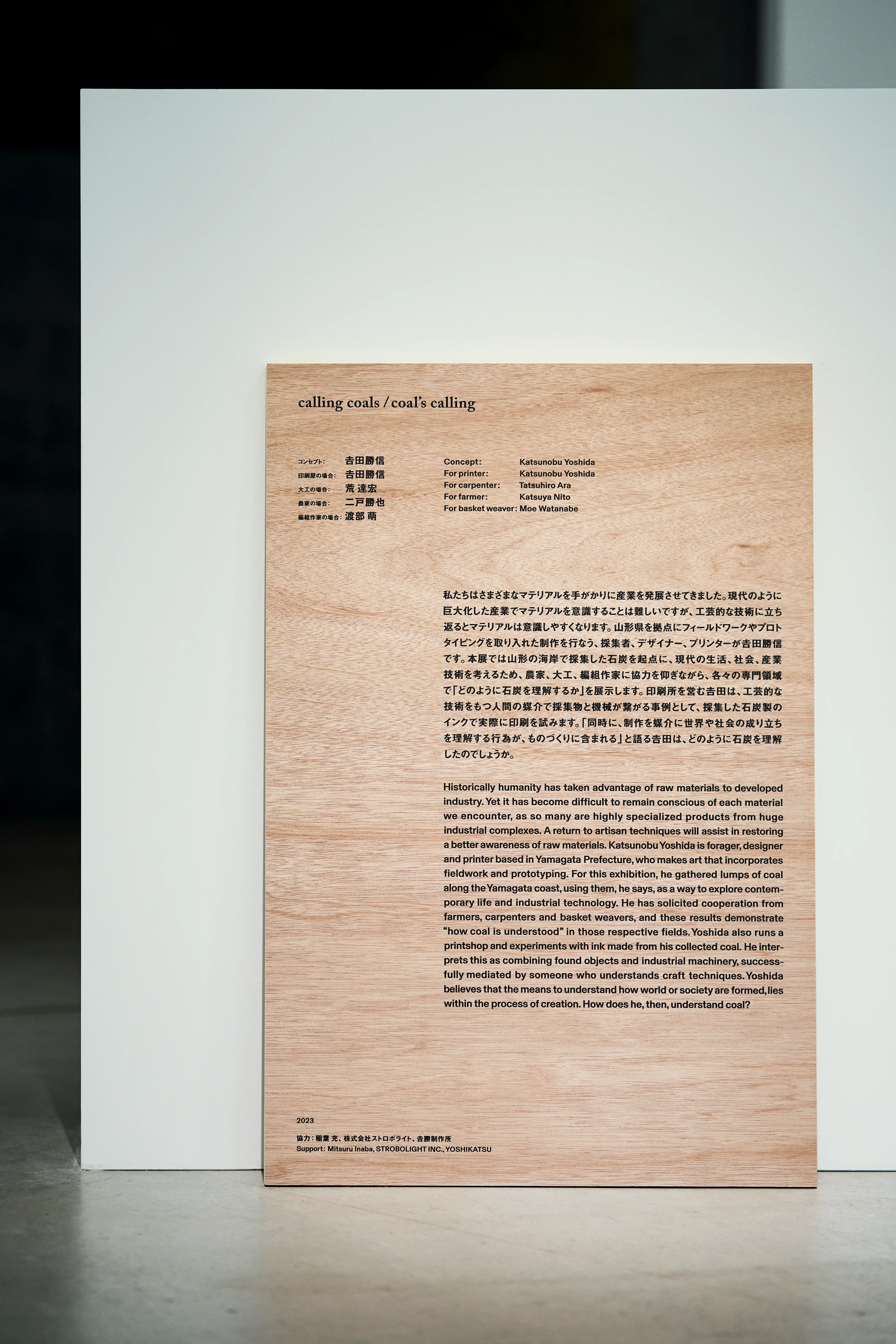
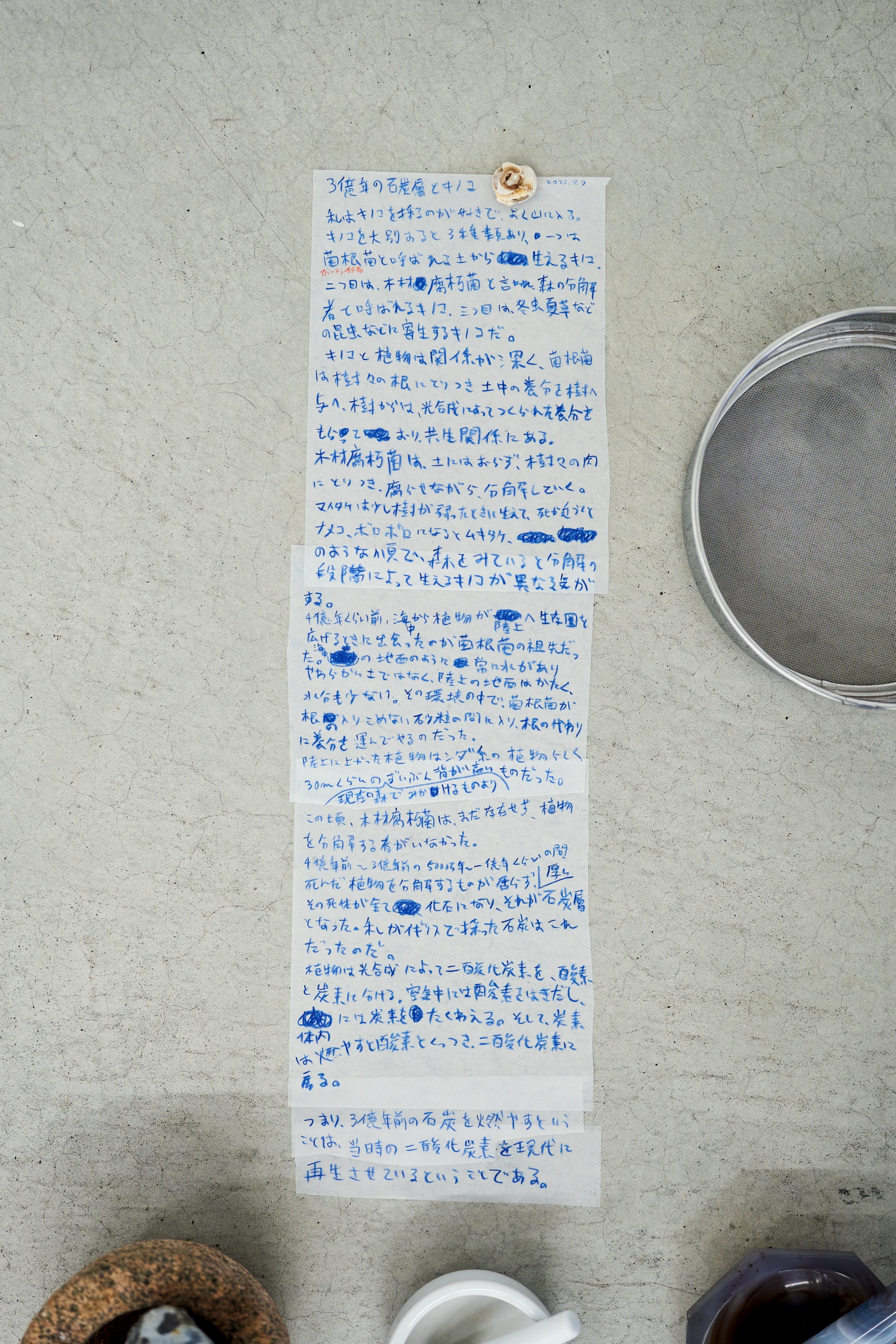
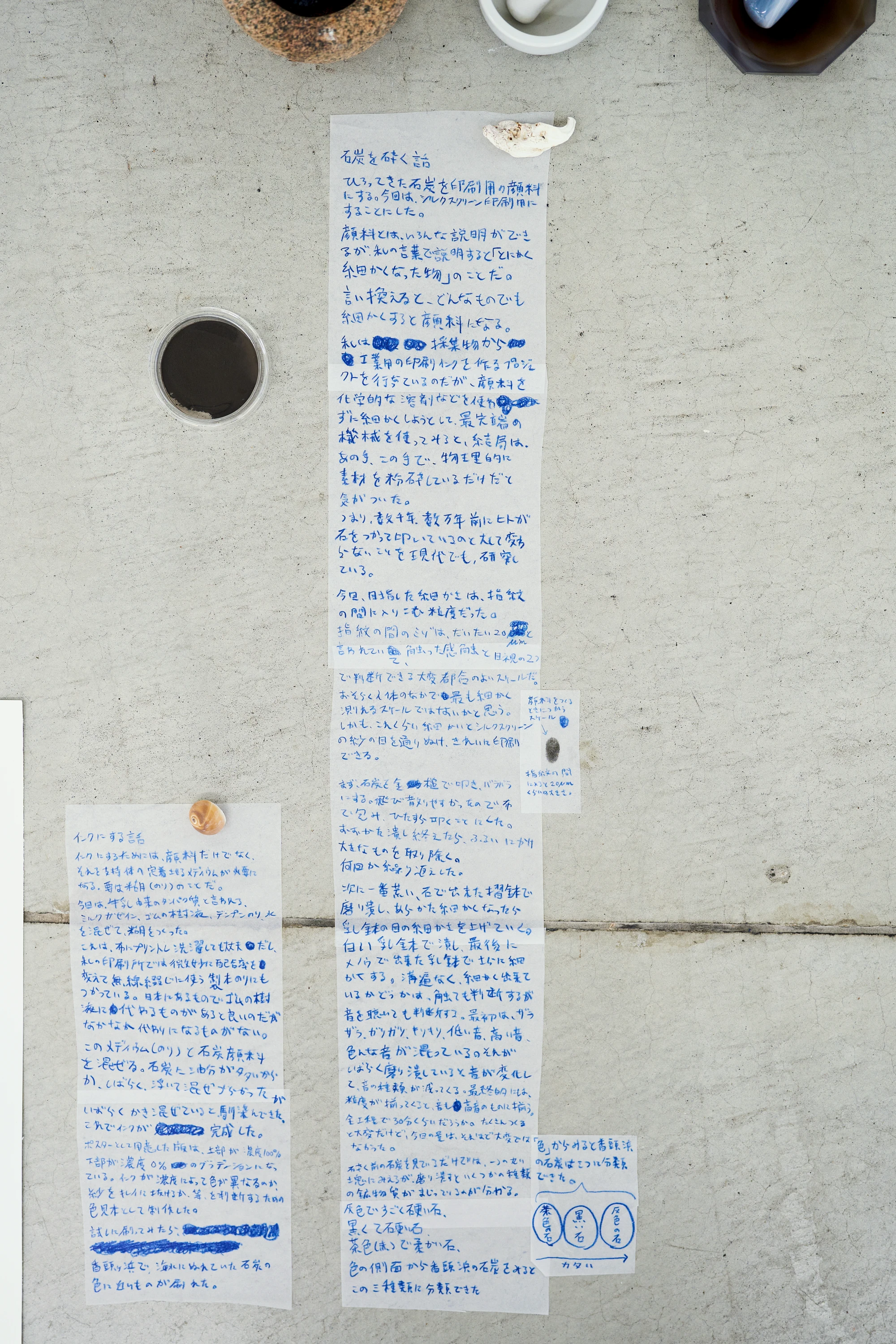
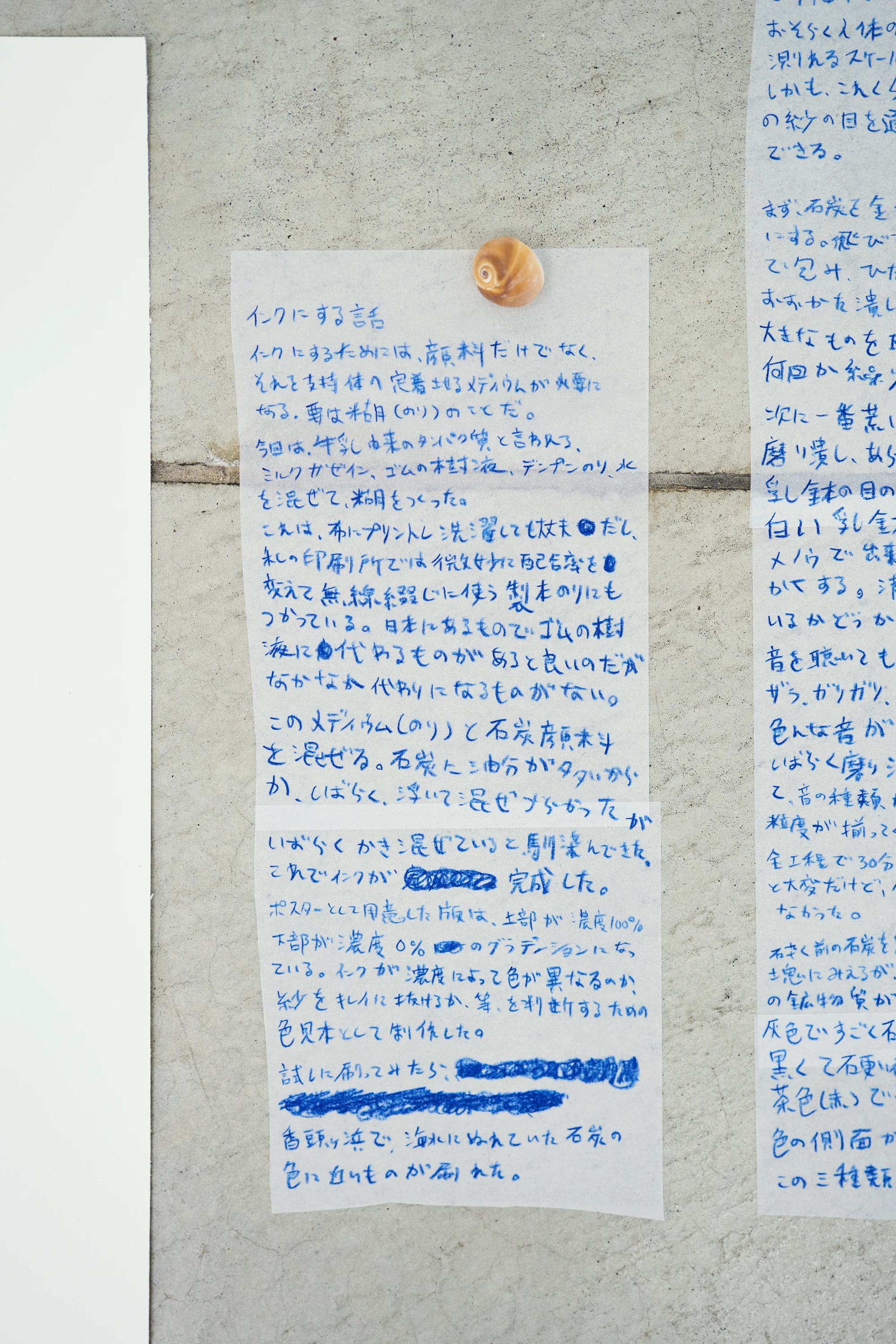
21_21 DESIGN SIGHT企画展「Material, or」へ参加し、展覧会ディレクターから提示された「人とマテリアルの絡まり」という問いを、実際の制作として引き受けた。展覧会では、この世界に存在するさまざまな「マテリアル」が、人や生物との関わりのなかで「もの」へとつながる意味を与えられ、「素材」となるプロセスに着目している。つまり、まだ特定の用途や意味を持たないものをマテリアルとし、人が何かをつくるためのものとして見出したものを素材として捉えている。
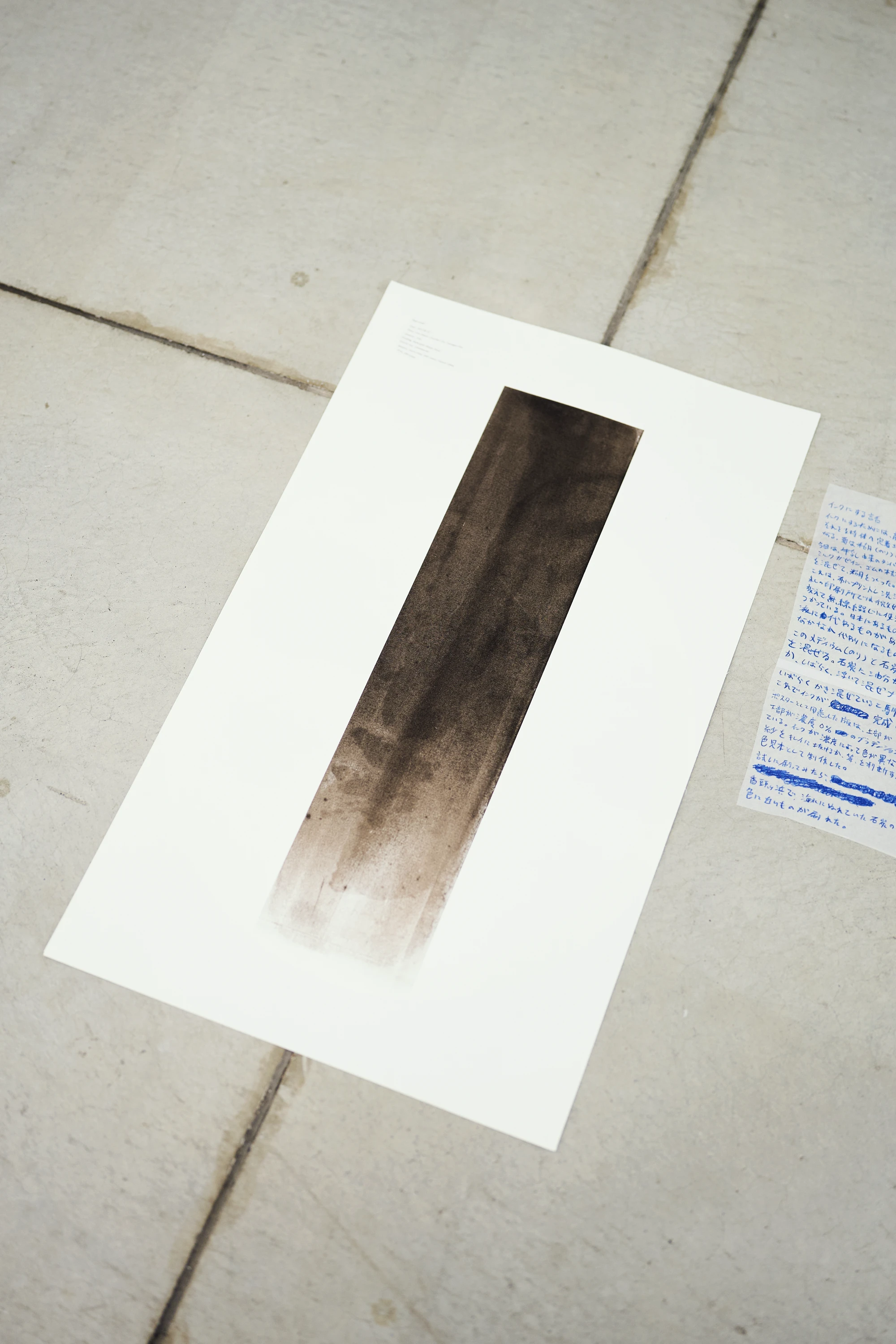
山形の海岸で採集した石炭を、印刷屋、大工、農家、編組作家という異なる職能を持つ複数人で扱い、採集から加工、制作までを行った。複数人で制作したのは、専門技能や個人の違いによって、同じマテリアルへの迫り方が変わるのではないかと考えたからである。
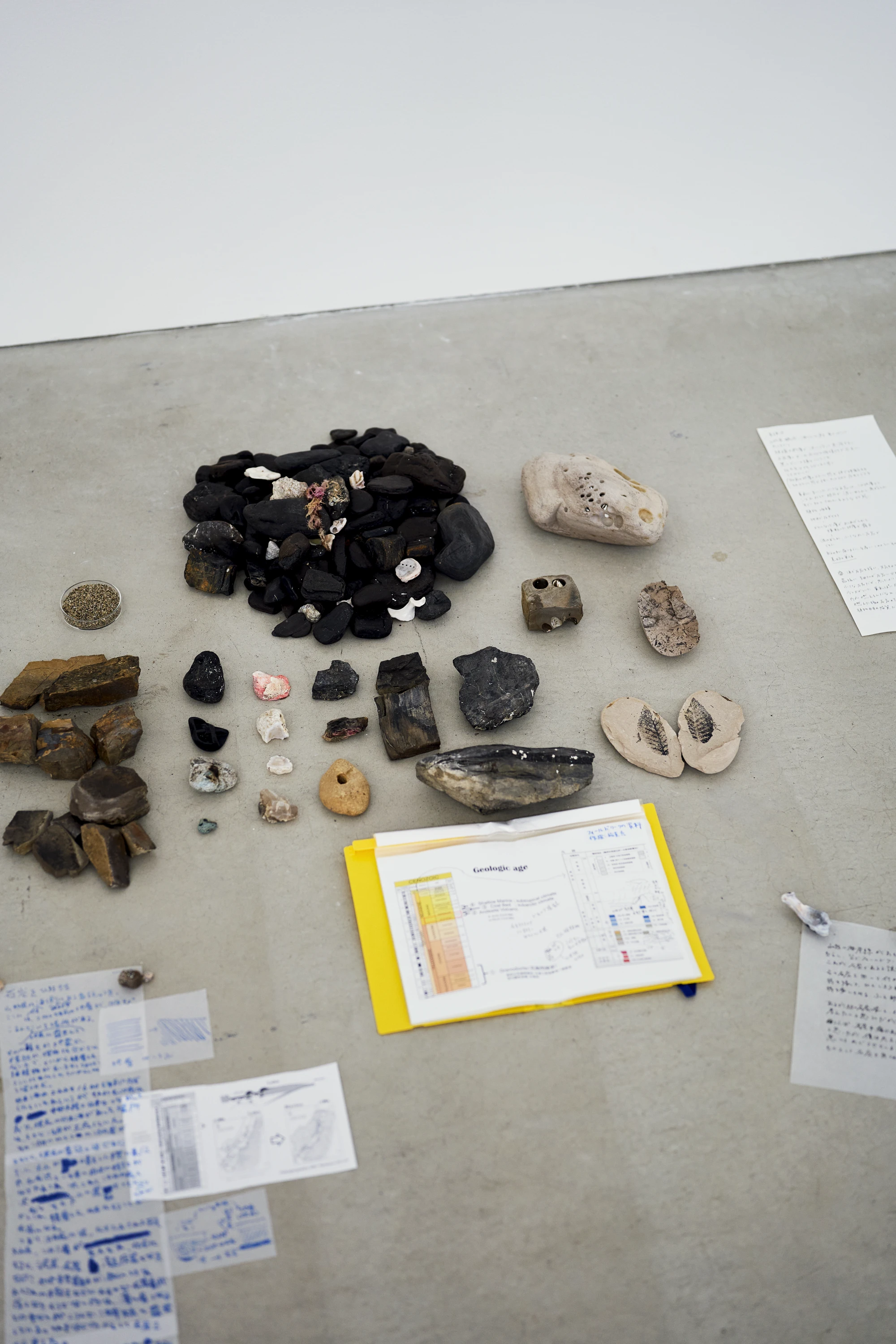
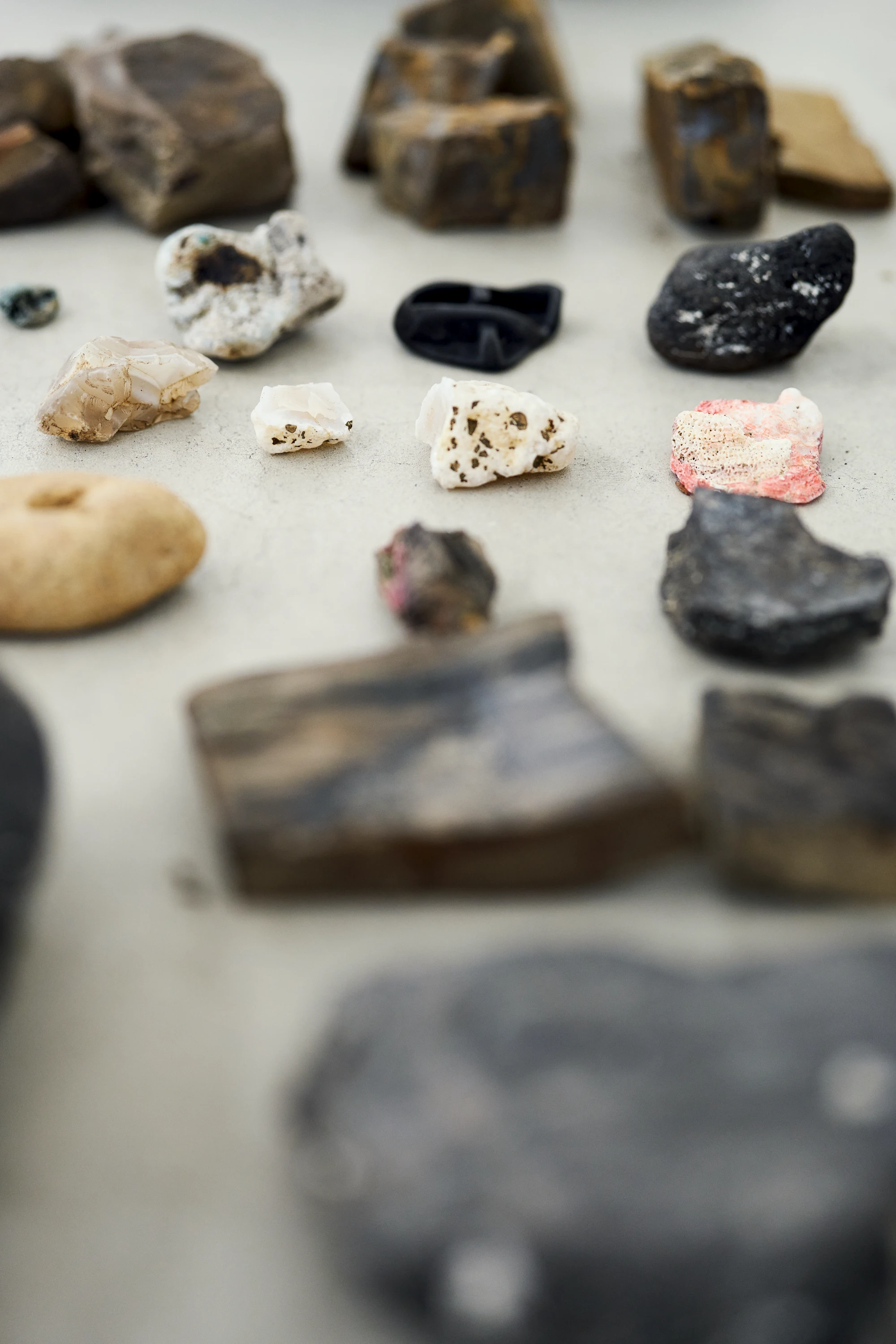
実際、採集の段階からその違いは現れた。光沢のある石炭ばかりを選ぶ人、石炭や泥炭を問わず量を集める人、玉石のように丸い石炭を選ぶ人。それぞれが、同じ海岸に落ちている黒い石を前にしながら、異なる差異を見出し、異なる基準で採集していた。
採集とは、ただ物を拾う行為ではない。マテリアル同士の違いを見極め、そのなかから何を素材として扱うのかを選び取る行為でもある。その選択によって、マテリアルは素材として立ち現れ、制作が動き始める。
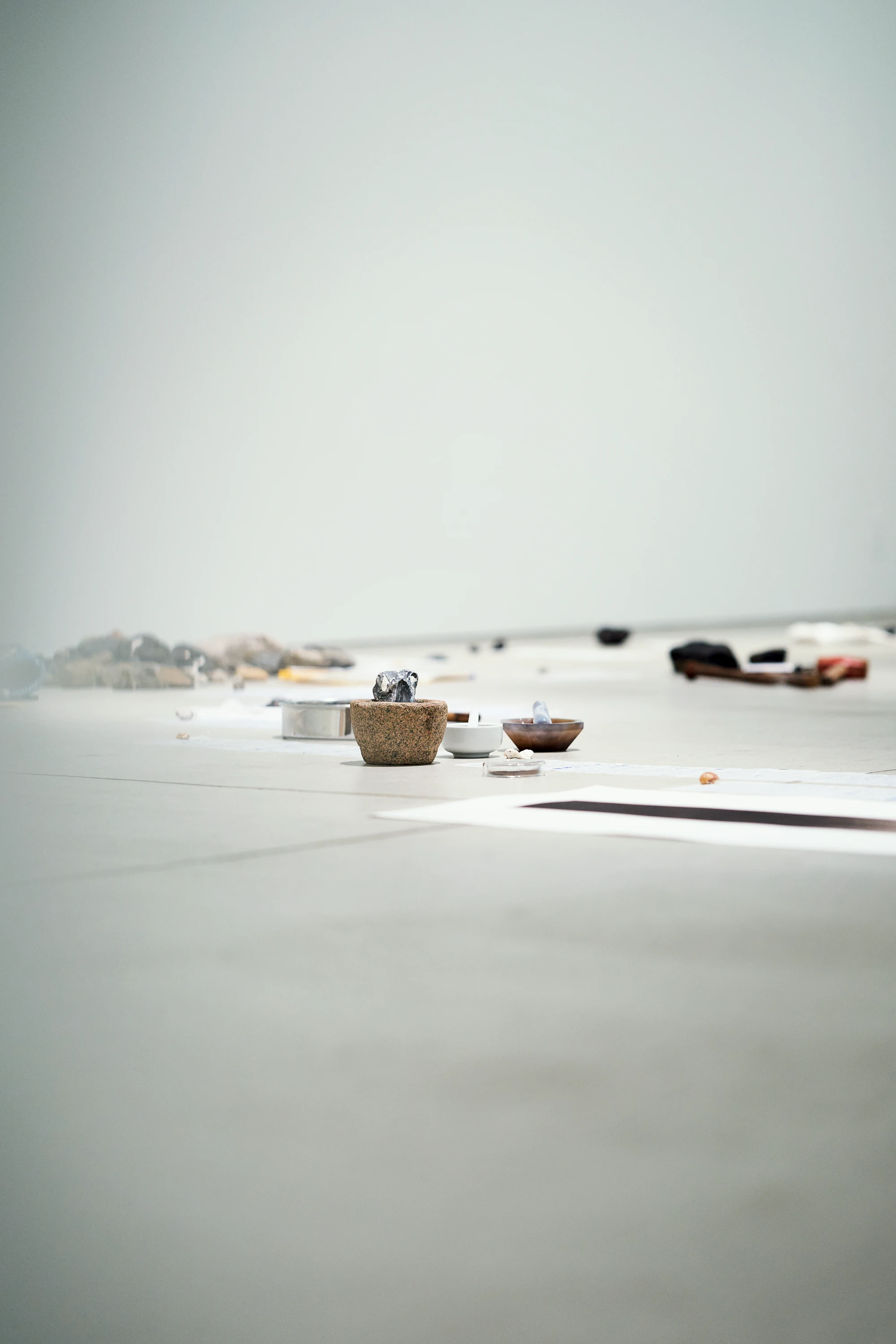
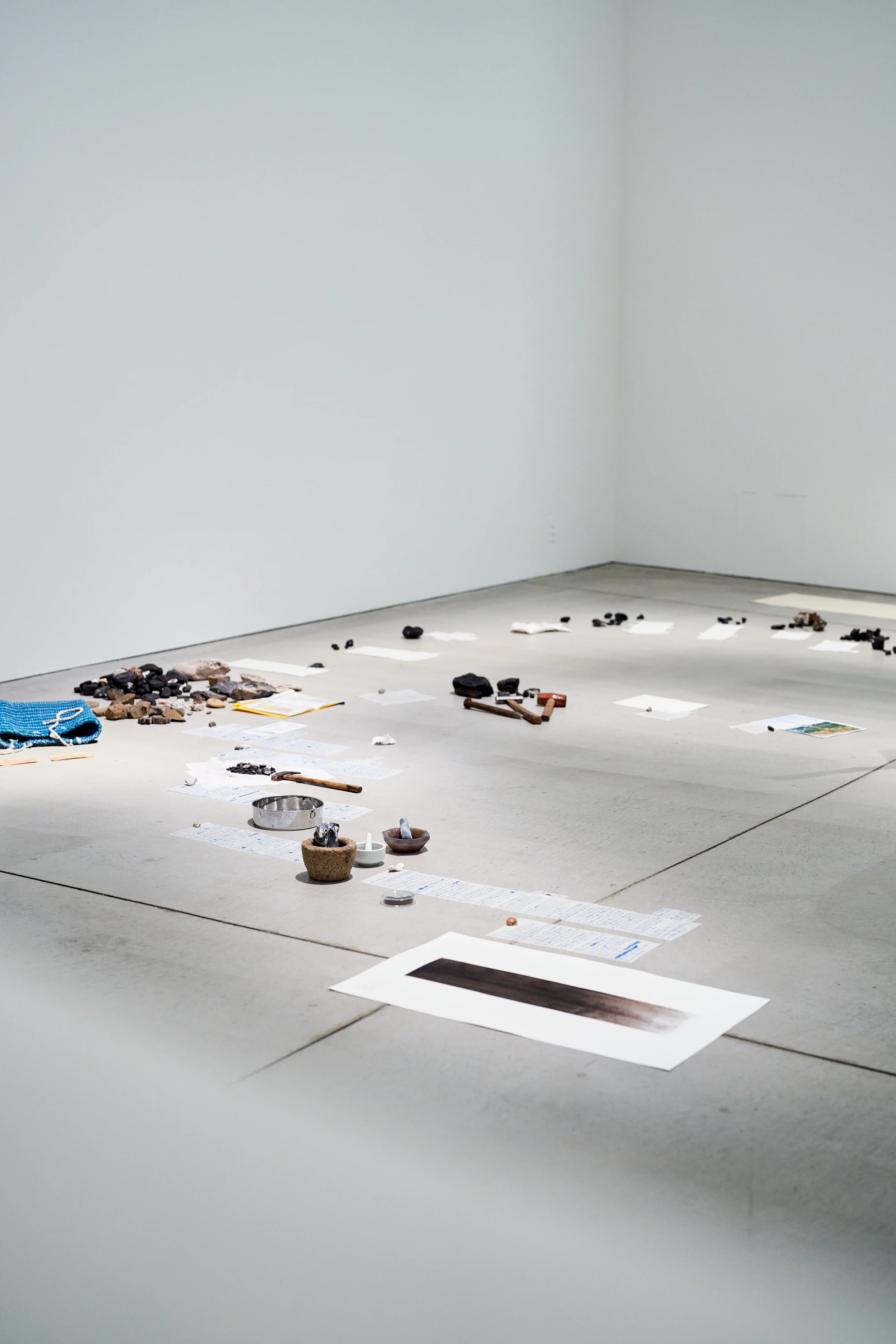
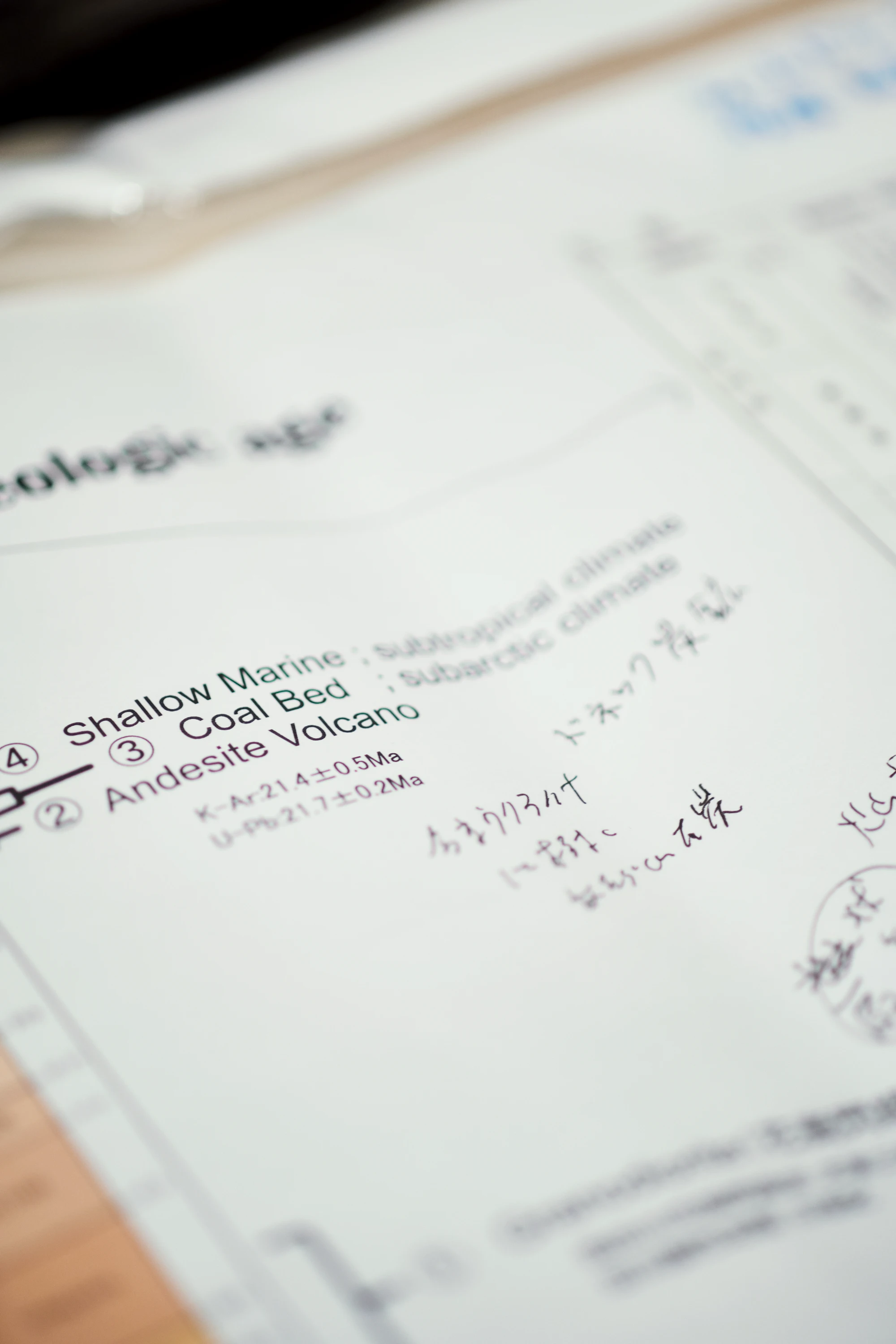
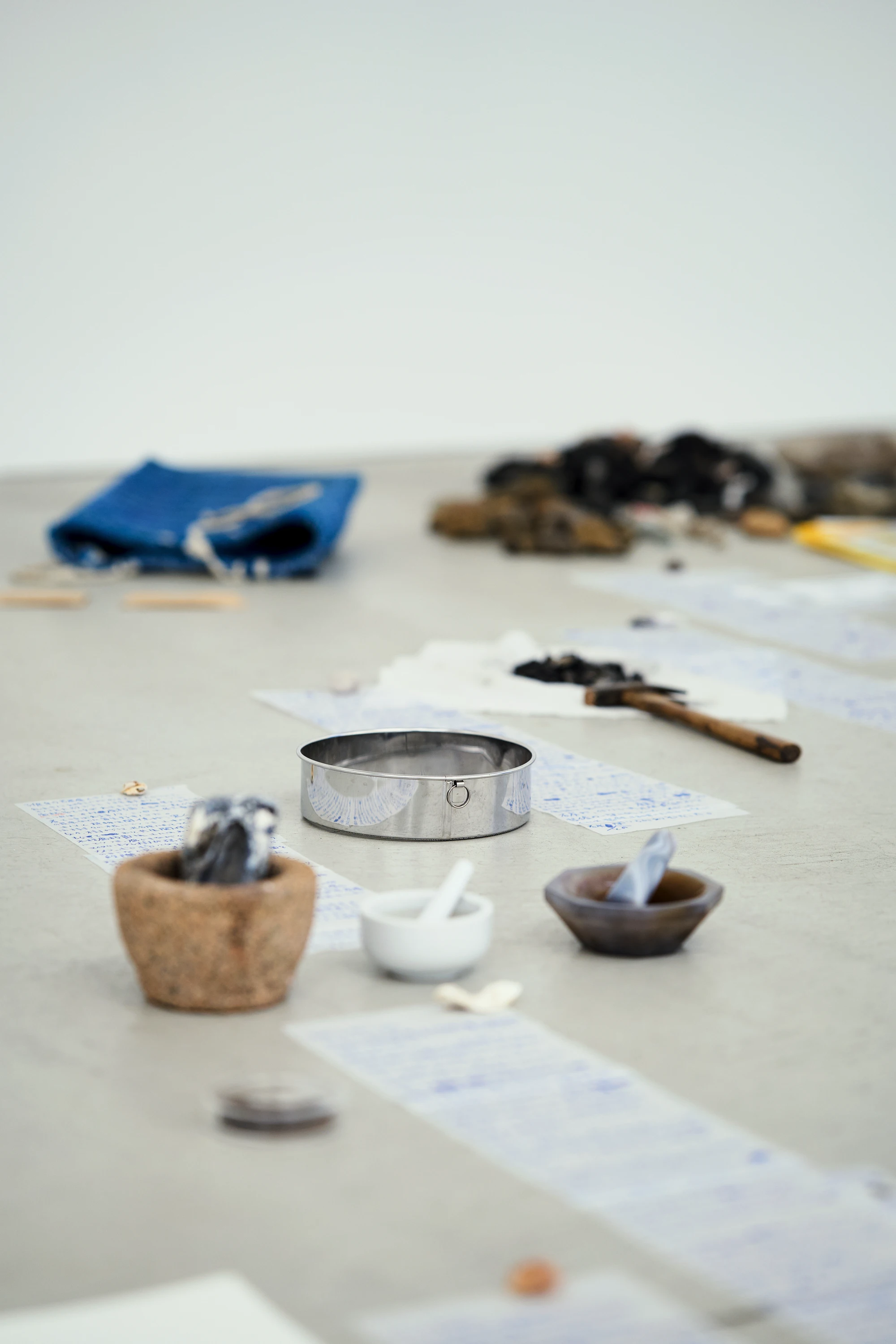
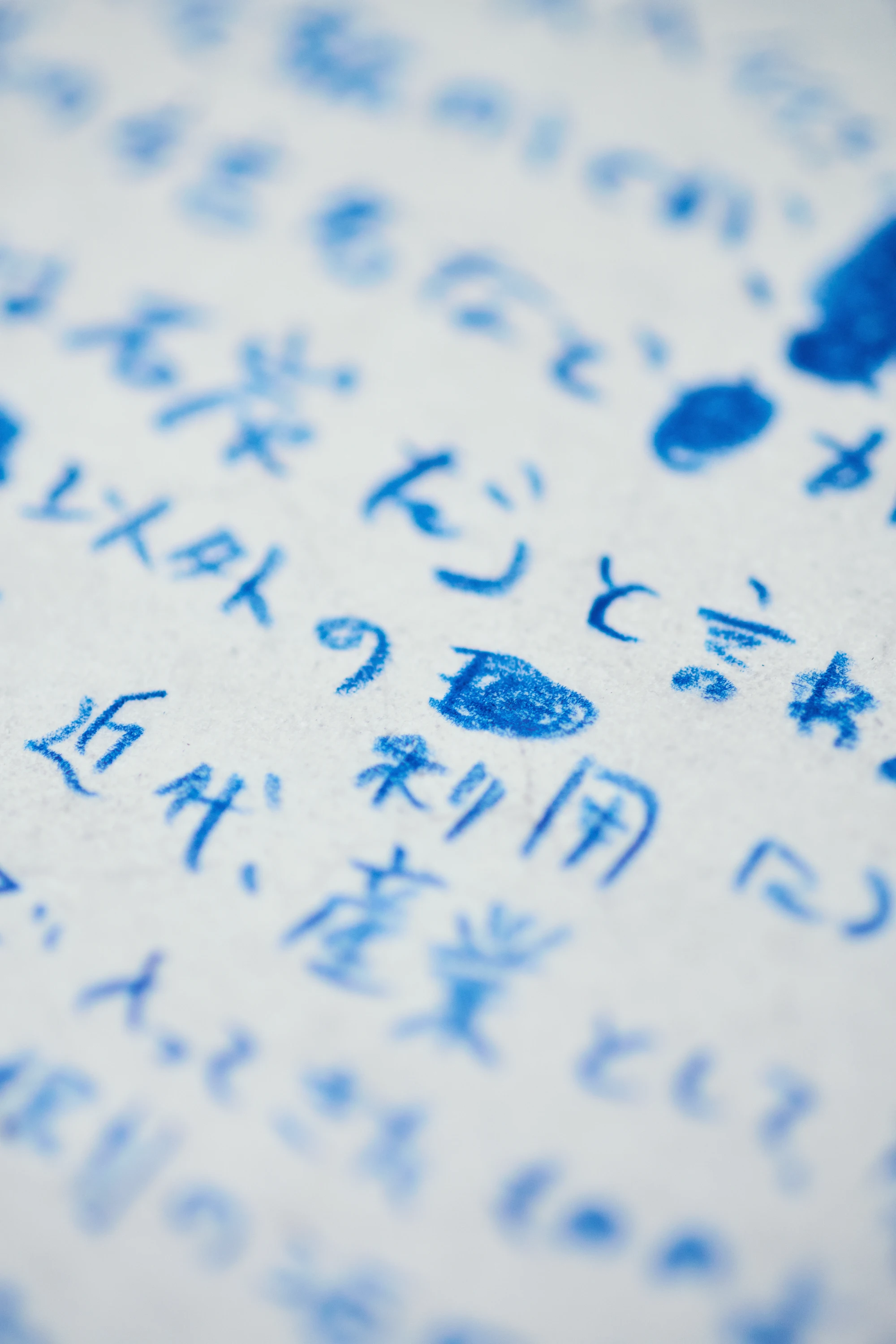
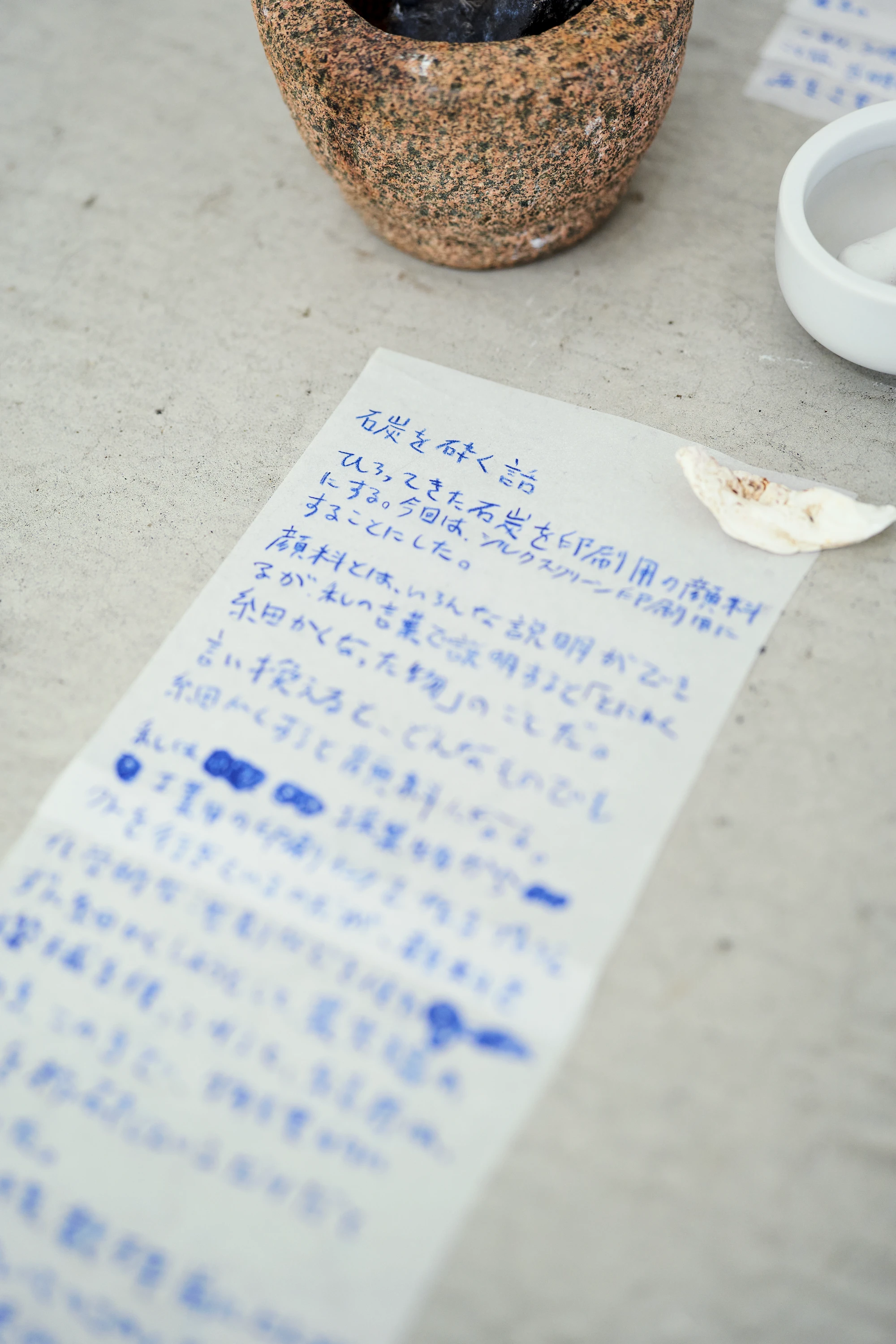
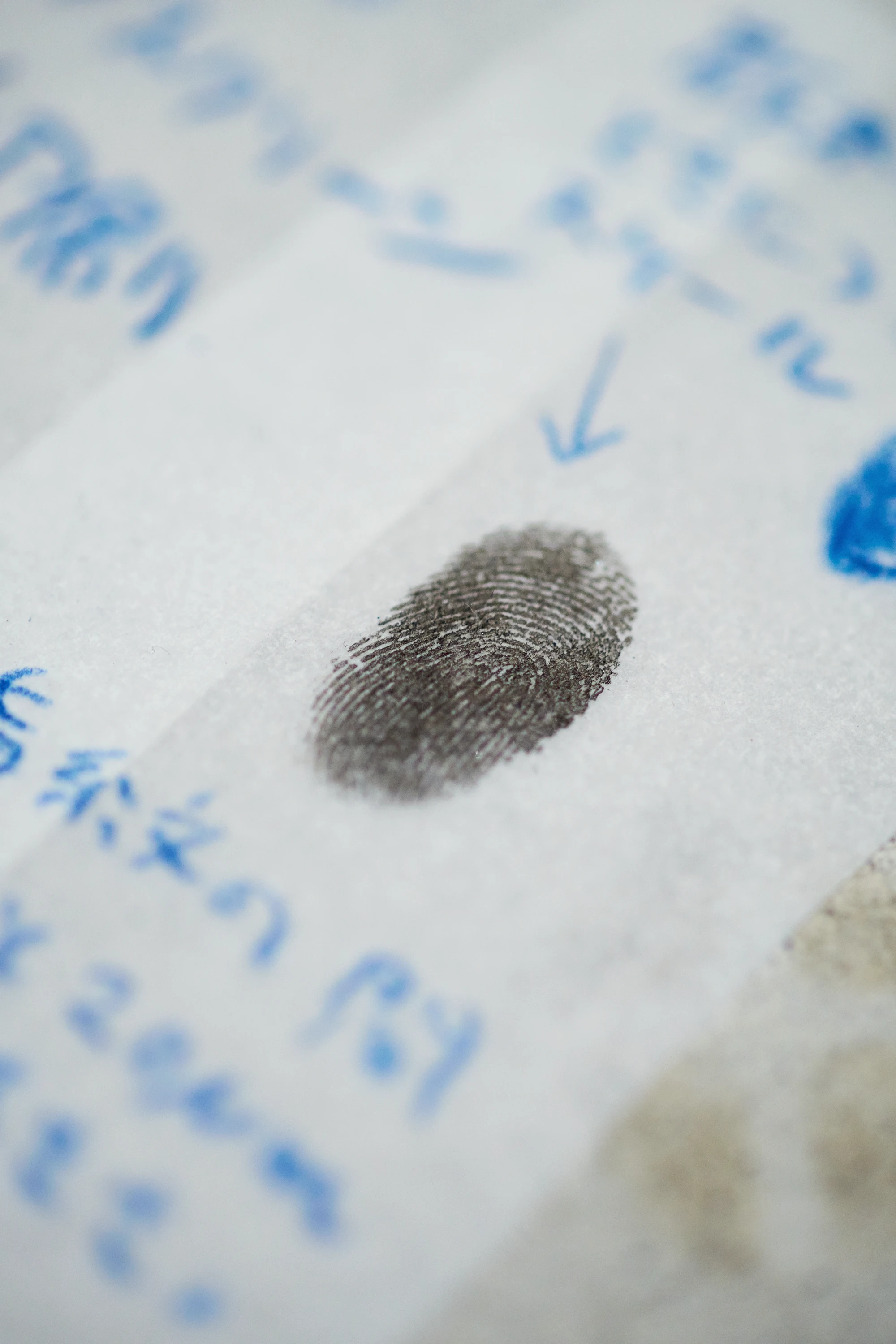
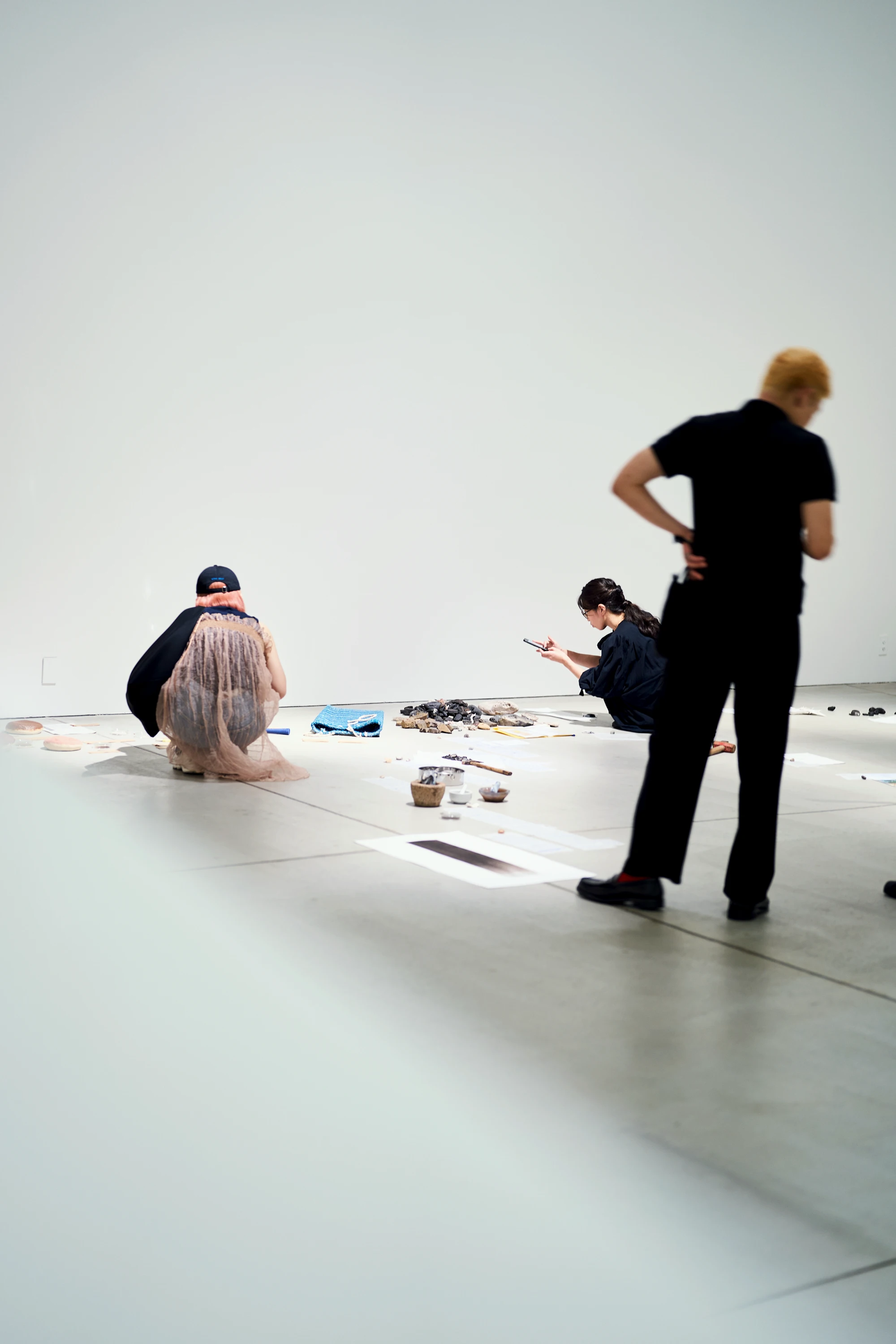
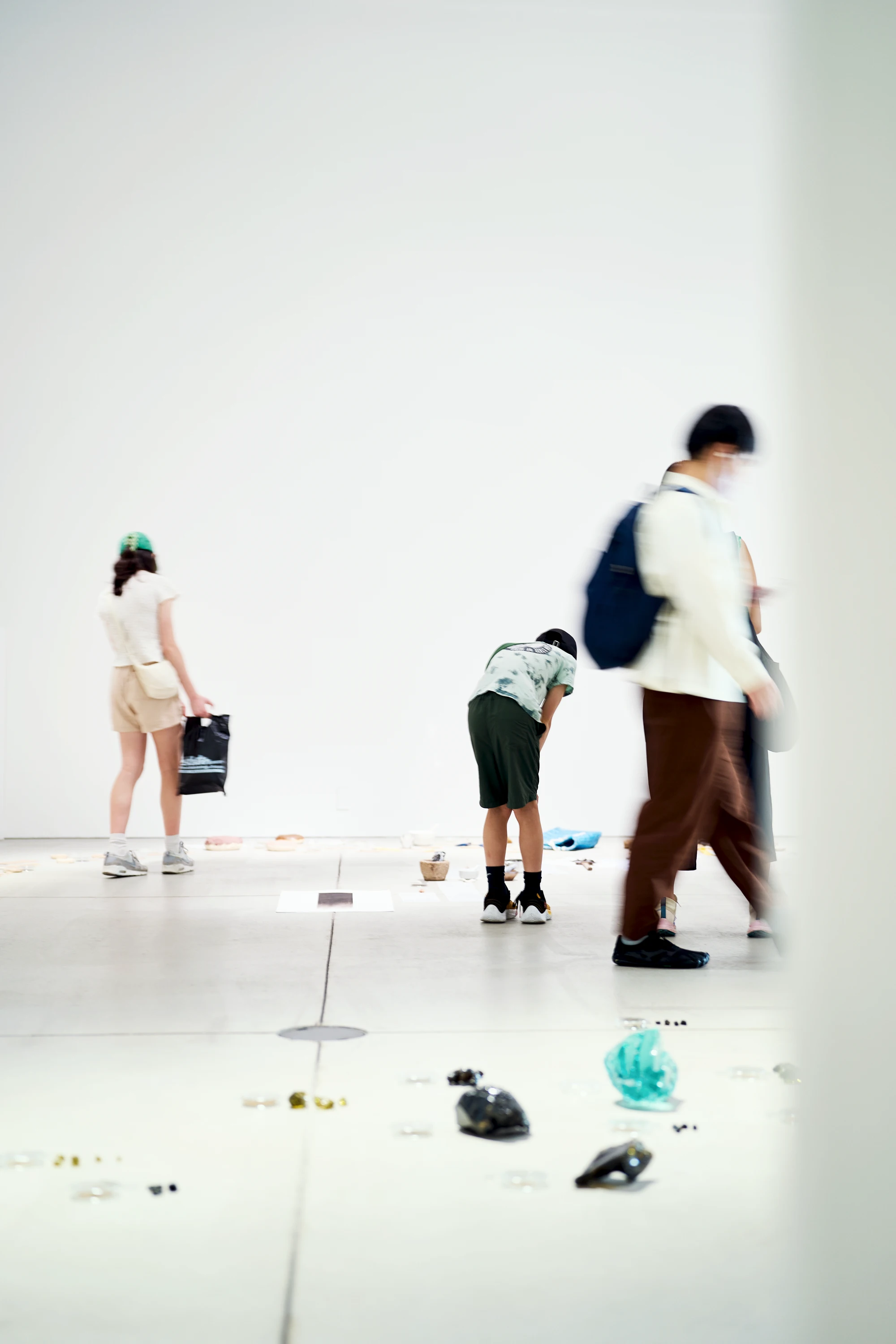
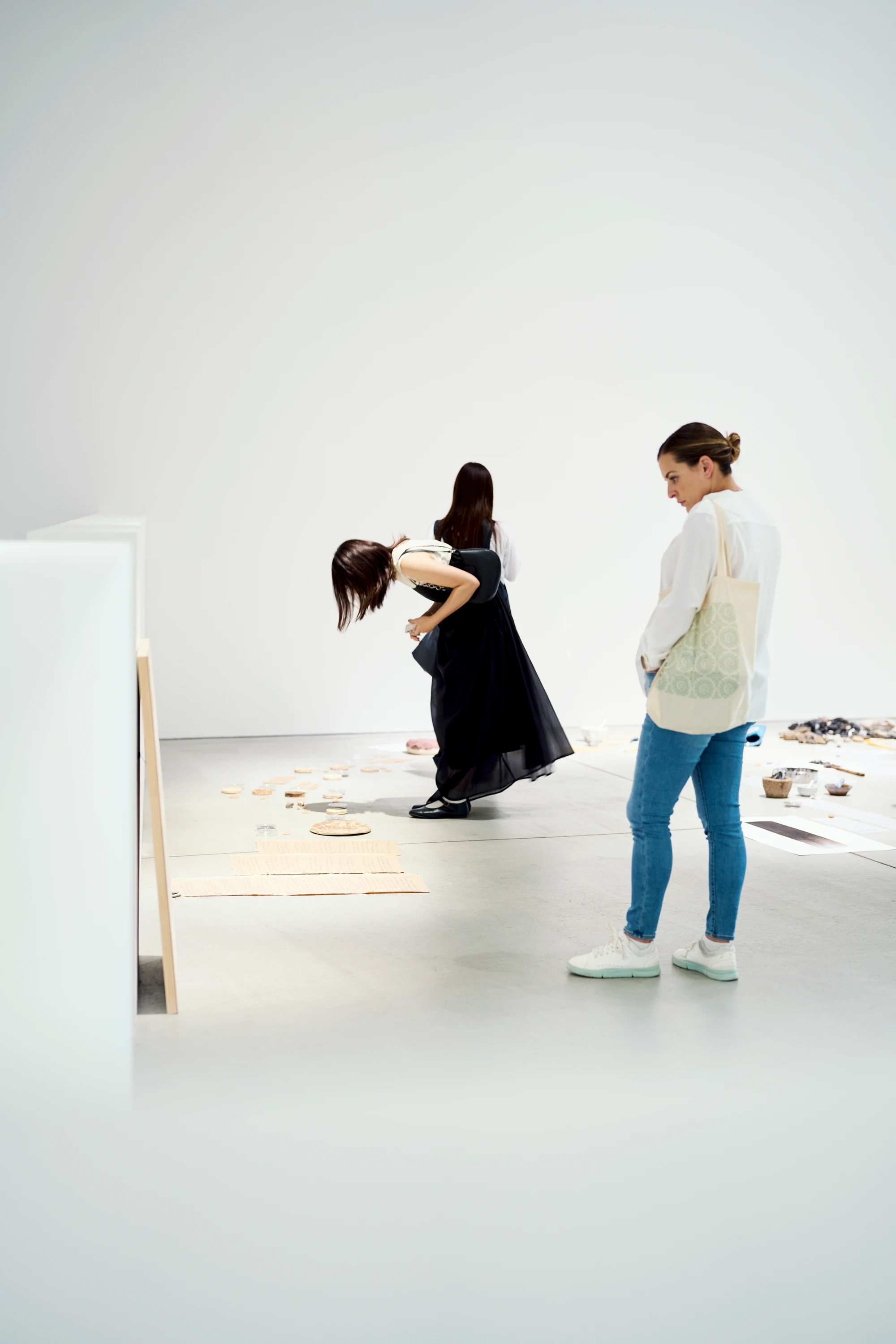
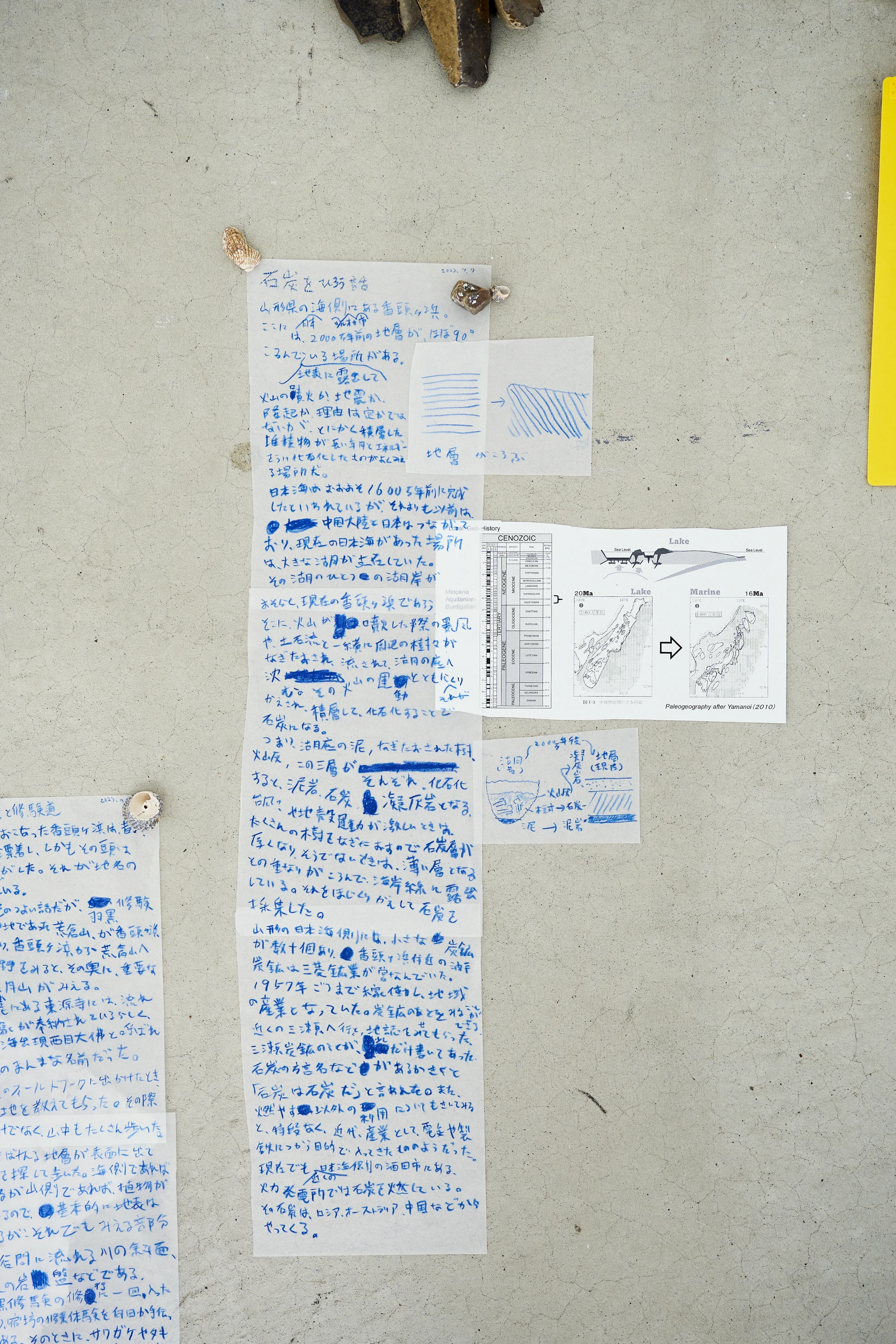
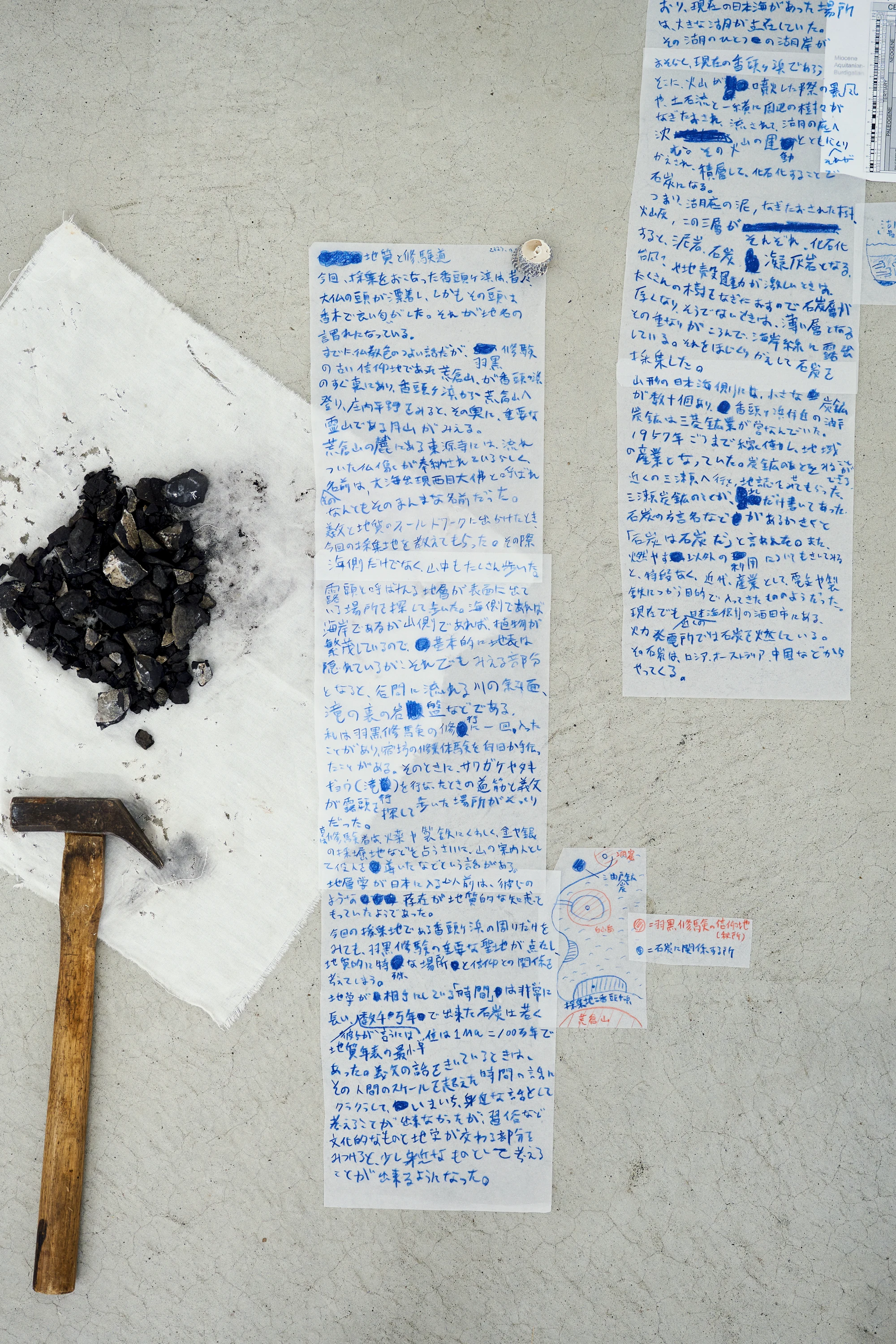
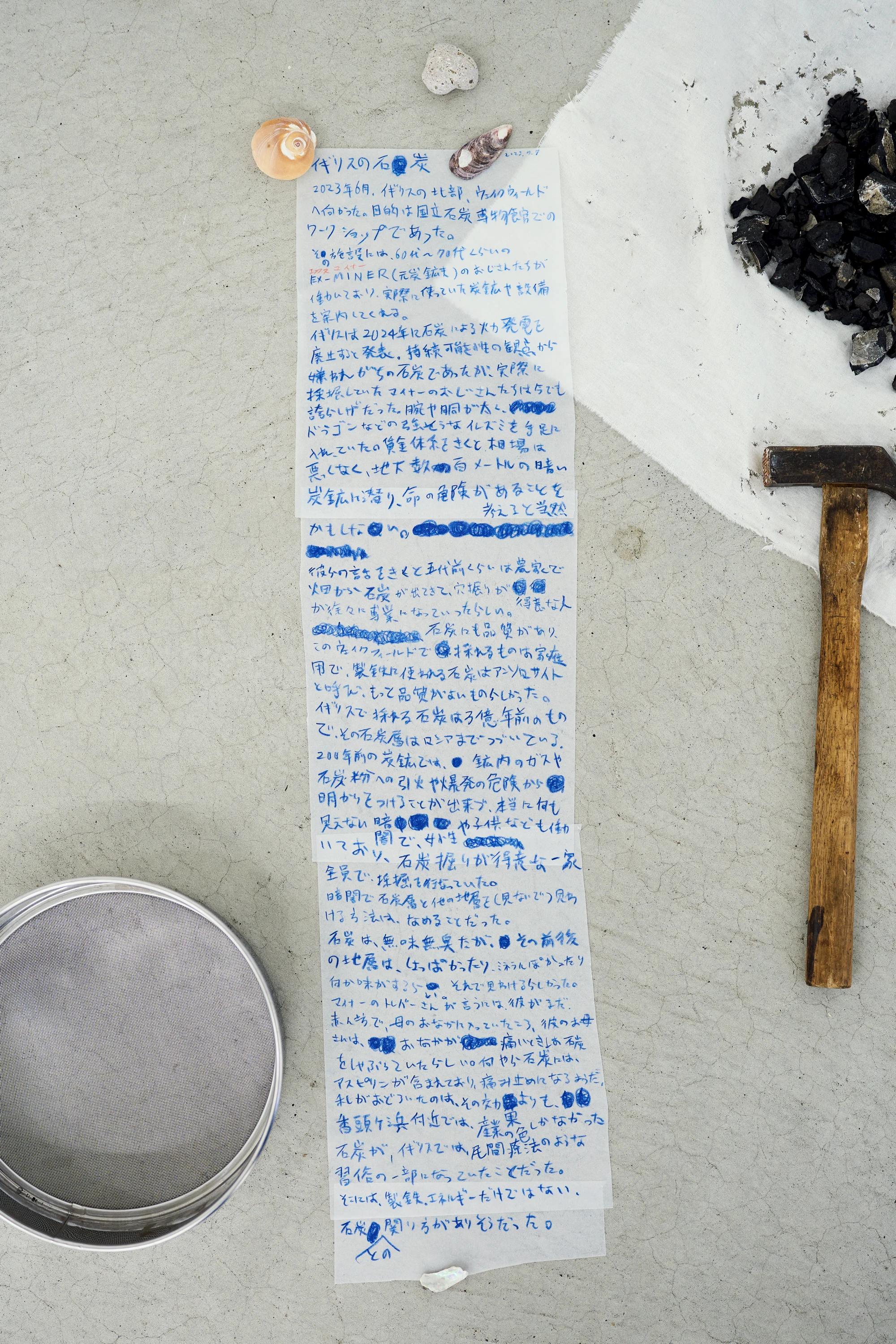
会場では、制作の過程で生まれた試作、残渣、道具、素材のうち、美術館で展示可能なものを並べた。あわせて、各段階で制作者が何を観察し、考え、学び、理解したのかを吉田がインタビューし、それぞれの制作者自身が記述した。
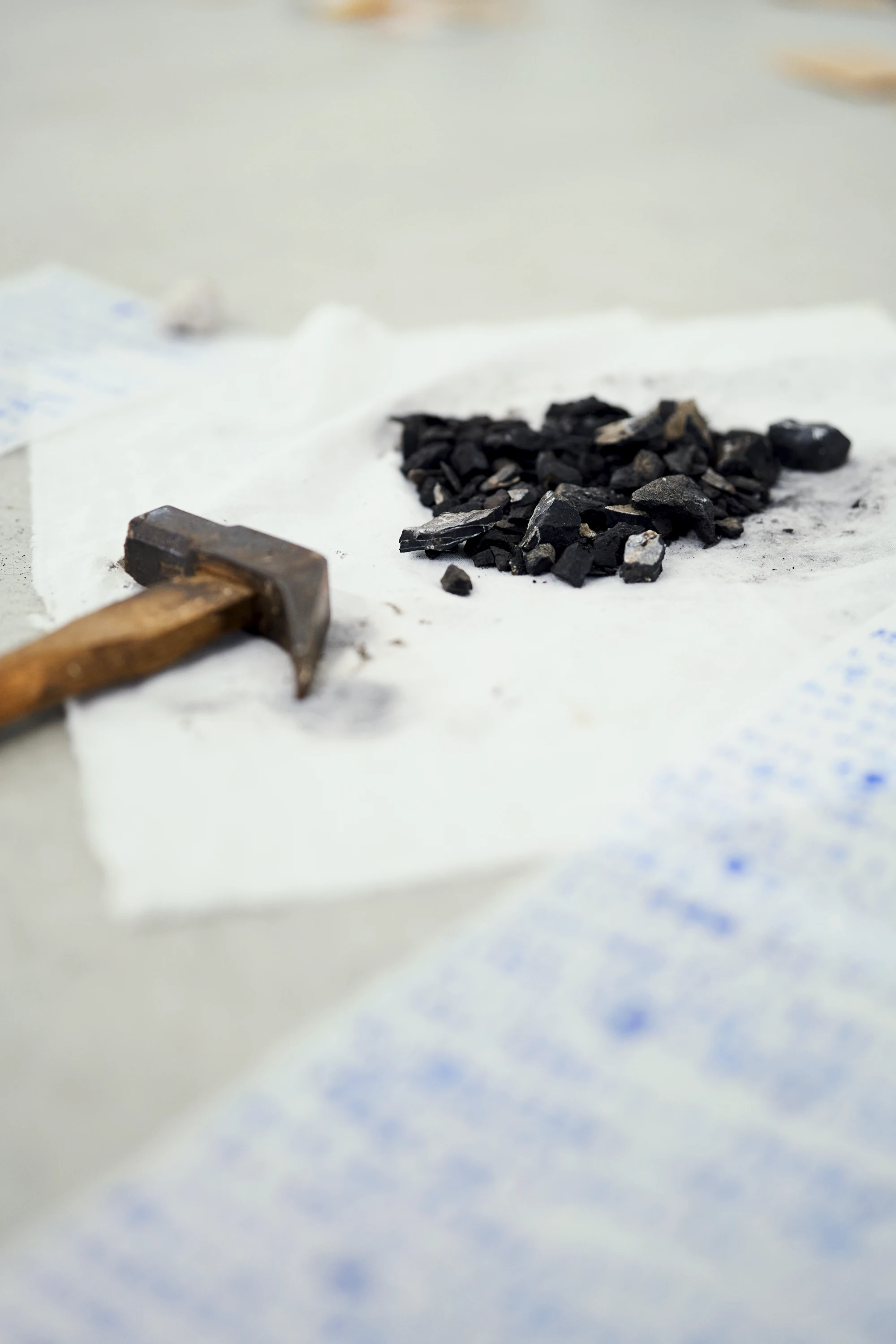
触る、砕く、削る、焼く、組む、刷る。石炭に対するそれぞれの行為は、単なる加工ではなく、石炭の性質や抵抗、その背後にある地質、生態系、技術、仕事の感覚へと迫るための方法でもあった。
一見すると、この作品は制作プロセスの展示であり、紙に書かれた文章は、並べられた実物を説明するキャプションのように見える。しかし、作品の構造はその反対である。
作品の中心にあるのは、完成品や実物資料ではなく、制作を通してそれぞれの制作者に生じた理解そのものである。記述された紙が作品の中心であり、並べられた実物資料は、その理解がいつ、どのような行為のなかで生まれたのかを示すキャプションとして機能している。
この作品を通して見えてきたのは、マテリアルが素材へと変化する瞬間にはすでに制作が潜んでいるということだった。
石炭を拾い、選び、砕き、焼き、組み、刷る。その過程で、私たちは石炭をただの燃料としてではなく、それぞれの職能や身体を通して、異なる素材として見出していった。
つまり、制作やデザインは、既にある素材に形を与えることから始まるのではない。マテリアルのなかに差異を見出し、その一部を選び取り、素材として関係を結ぶところから始まる。その意味で、制作/デザインの始まりには、すでに採集という行為があるのではないかと考えるようになった。
-
For the exhibition Material, or at 21_21 DESIGN SIGHT, I took up the question posed by the exhibition director—“the entanglement between humans and raw materials”—as an actual process of making. The exhibition focused on the process by which the various raw materials that exist in the world are assigned meanings through their relationships with people and other living things, and thereby become media for the purpose of creation. In other words, it considered things that have not yet been given a particular use or meaning as raw materials, and things that have been recognized as sources for making as media.
Coal collected from the coast of Yamagata was handled by several practitioners with different areas of expertise: a printer, a carpenter, a farmer, and a basketry artist. Together, we moved through the processes of collecting, processing, and making. We chose to work as a group because we thought that differences in professional skills and individual sensibilities might produce different ways of approaching the same raw material.
These differences appeared from the very stage of collecting. Some people selected only glossy pieces of coal. Some gathered as much as they could, regardless of whether the pieces were coal or peat. Others chose rounded pieces resembling river stones. Standing before the same black stones scattered along the same coast, each person perceived different distinctions and collected according to different criteria.
Collecting is not simply the act of picking things up. It is also an act of discerning differences among raw materials and selecting what will be treated as a medium for making. Through that selection, a raw material begins to emerge as a medium, and the process of making is set in motion.
In the exhibition space, we displayed the prototypes, residues, tools, and materials that had emerged during the process and could be presented within a museum. Yoshida also interviewed each participant about what they had observed, considered, learned, and understood at each stage. Each practitioner then recorded these reflections in their own words.
Touching, crushing, cutting, firing, assembling, printing. Each action performed on the coal was not merely a form of processing. It was also a way of approaching the coal’s properties and resistance, as well as the geology, ecosystems, techniques, and working sensibilities behind it.
At first glance, the work appears to be an exhibition of a making process, with the written texts serving as captions for the physical objects on display. Structurally, however, the relationship is reversed.
At the center of the work are not the finished objects or the physical materials, but the understandings that emerged for each maker through the process of making. The written texts form the core of the work, while the displayed objects function as captions, indicating when and through what kinds of actions those understandings arose.
What became clear through this work was that making is already latent in the very moment when a raw material becomes a medium.
By picking up, selecting, crushing, firing, assembling, and printing with coal, we came to perceive it not merely as fuel, but as something that could become ink, glaze, structure, or woven form through our respective skills and bodies.
Making and design, then, do not begin by giving form to a medium that already exists. They begin by discerning differences within raw materials, selecting from among them, and entering into a relationship through which something emerges as a medium. In this sense, I came to think that the act of collecting is already present at the very beginning of making—or design.
関連リンク
2023
-
Created for Exhibition “Material, or ”at 21_21 DESIGN SIGHT, 2023
-
コンセプト:吉田勝信
-
印刷屋の場合:吉田勝信
大工の場合:荒 達宏
農家の場合:二戸勝也
編組作家の場合:渡部 萌
-
協力:稲葉 充、株式会社ストロボライト、吉勝制作所
-
photo by Sawaki Ryohei